What to Check
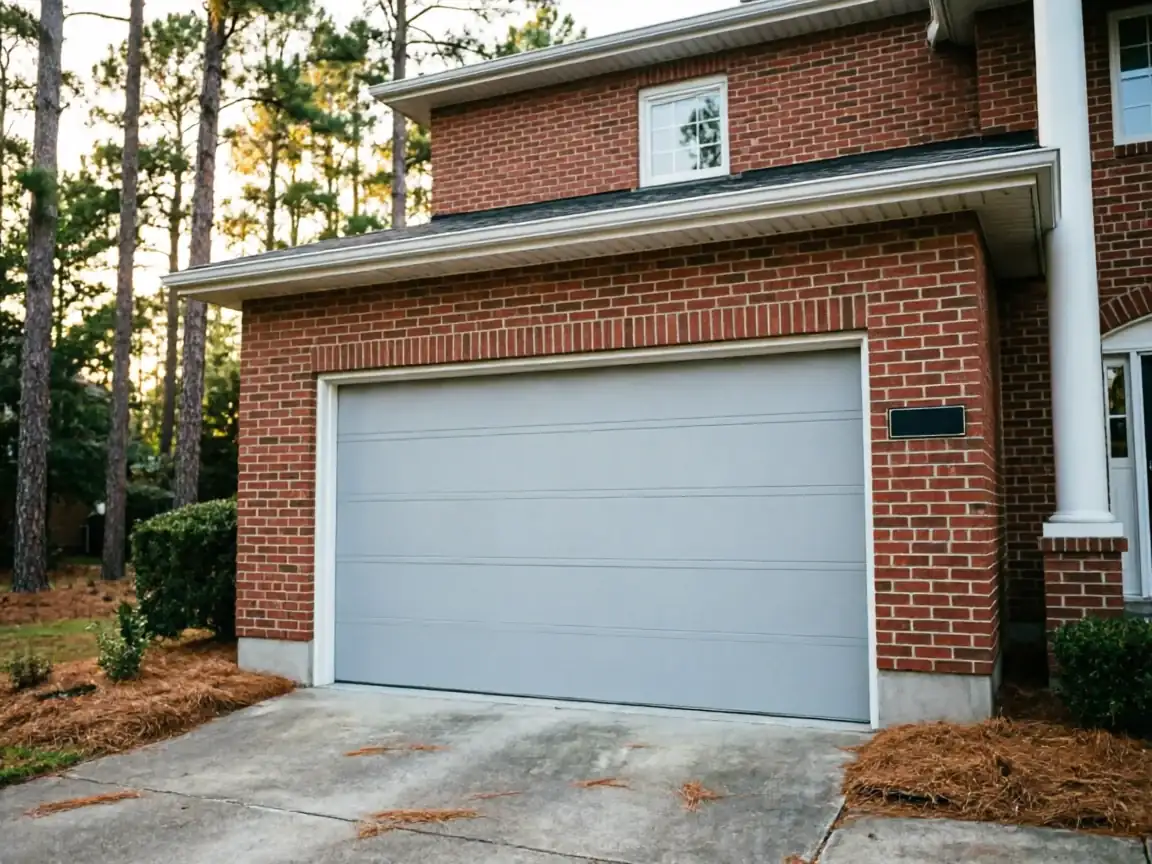
Most houses in Woodstock went up between 1964 and 2007, with the median landing around 1984. That matters because the insulation requirements that apply to garage doors today didn't exist when most of this stock was built. Across the nine areas that make up the bulk of Woodstock's housing, the 1980s and 90s dominate, and a lot of those garages still carry the door that came with the house: a single layer of steel, no polystyrene backing, no thermal break at the track.
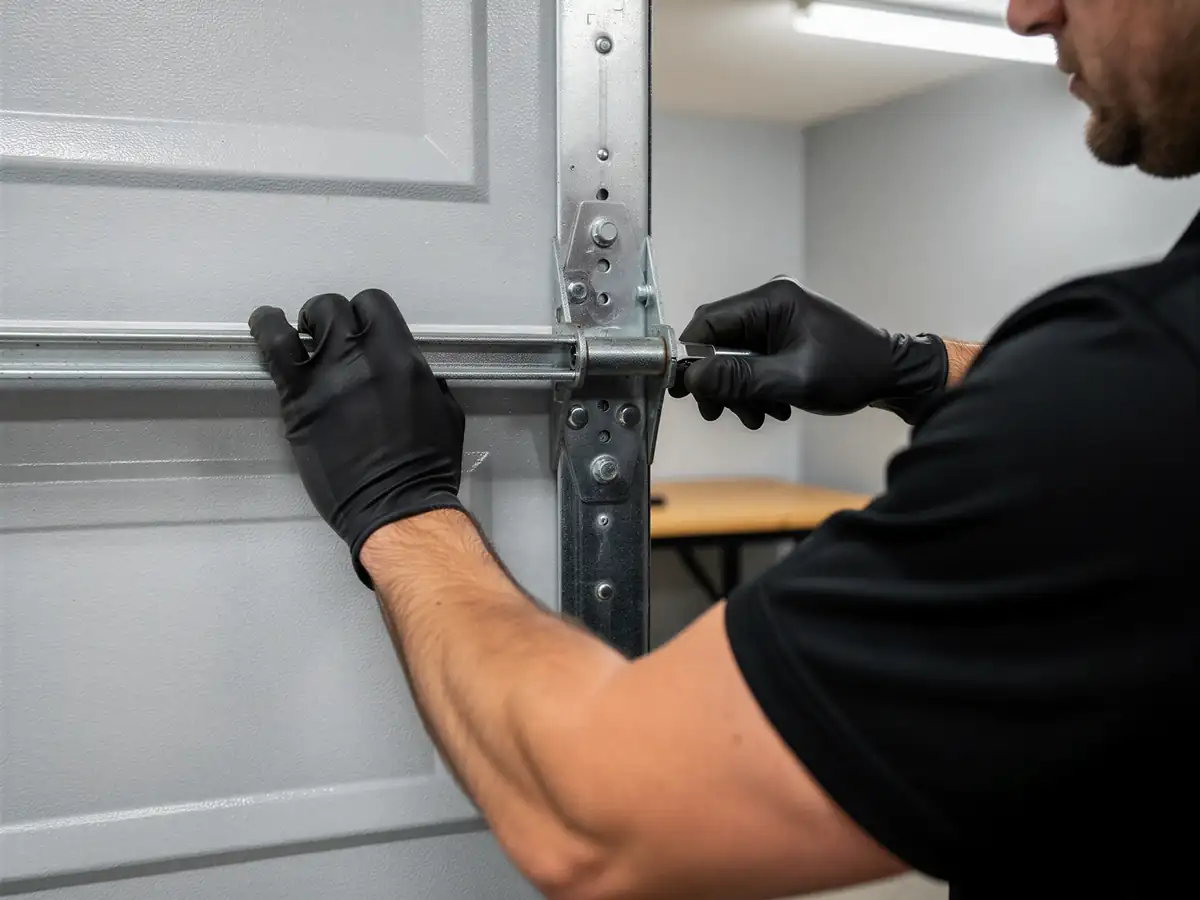
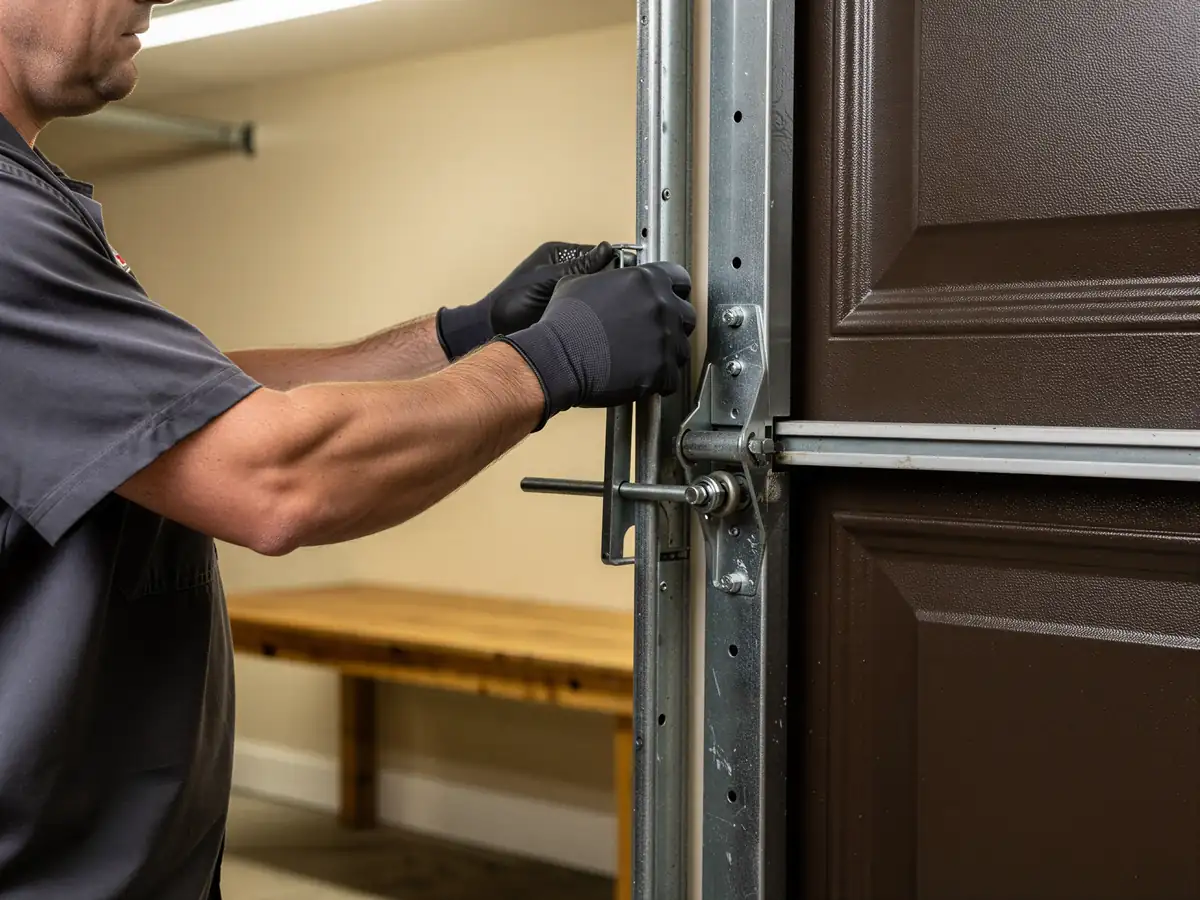
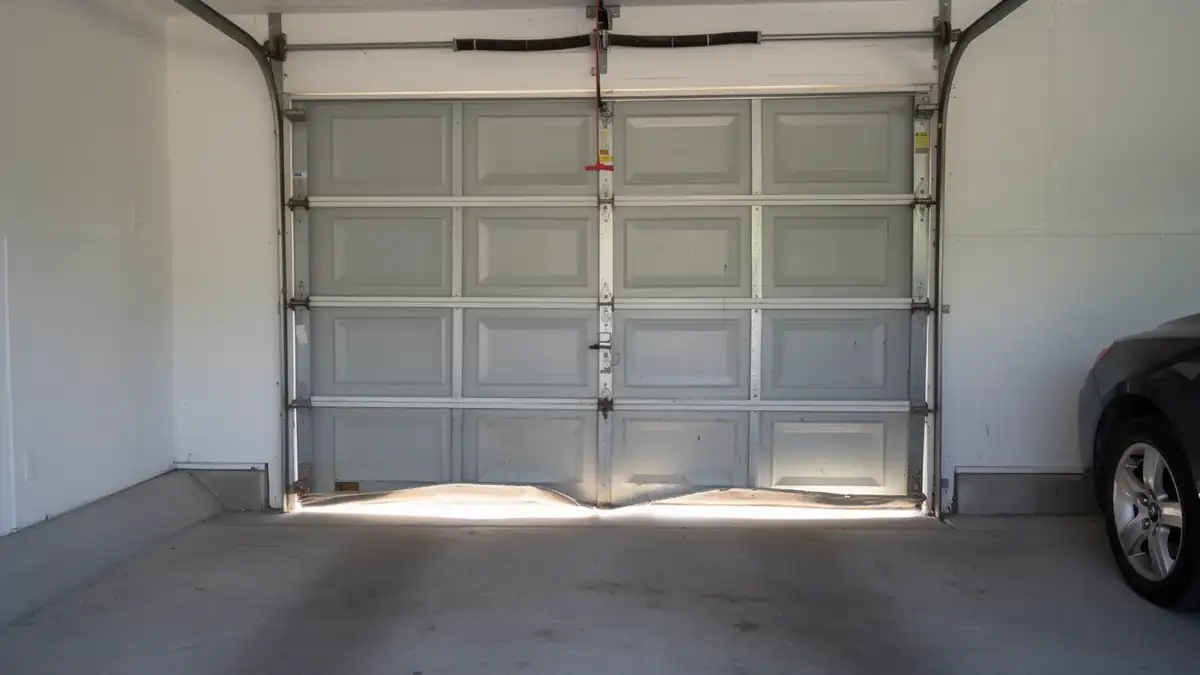
Start by checking the inside face of the panel. If you can see the ribbing on the back with nothing filling the gaps, that's a bare skin. Check the bottom seal next - on a door this age it's usually the original rubber, cracked and flattened on one side from thirty-plus years of the same garage floor slope. Check the hinges for rust bloom at the pivot points, especially on the bottom two sections where road salt and lawn chemicals track in. And check whether the torsion spring was ever upsized. A bare steel door and an insulated retrofit door don't weigh the same, and a spring sized for the original door will over-lift or sag under a heavier replacement.
The Seasonal Bit
Woodstock sits in a cold-moderate climate band
Which means real swings between a summer afternoon in the garage and a cold front at 4am, but nothing like the deep-freeze cycling you'd get further north. On an insulated door, the steel skin barely notices. On the bare steel common in a lot of Woodstock's 1980s and 90s housing, the panel itself becomes the thermometer, expanding and contracting enough over a season to work the screws loose at the hinge points and change how tight the torsion spring sits against the shaft.
That's the seasonal pattern we see
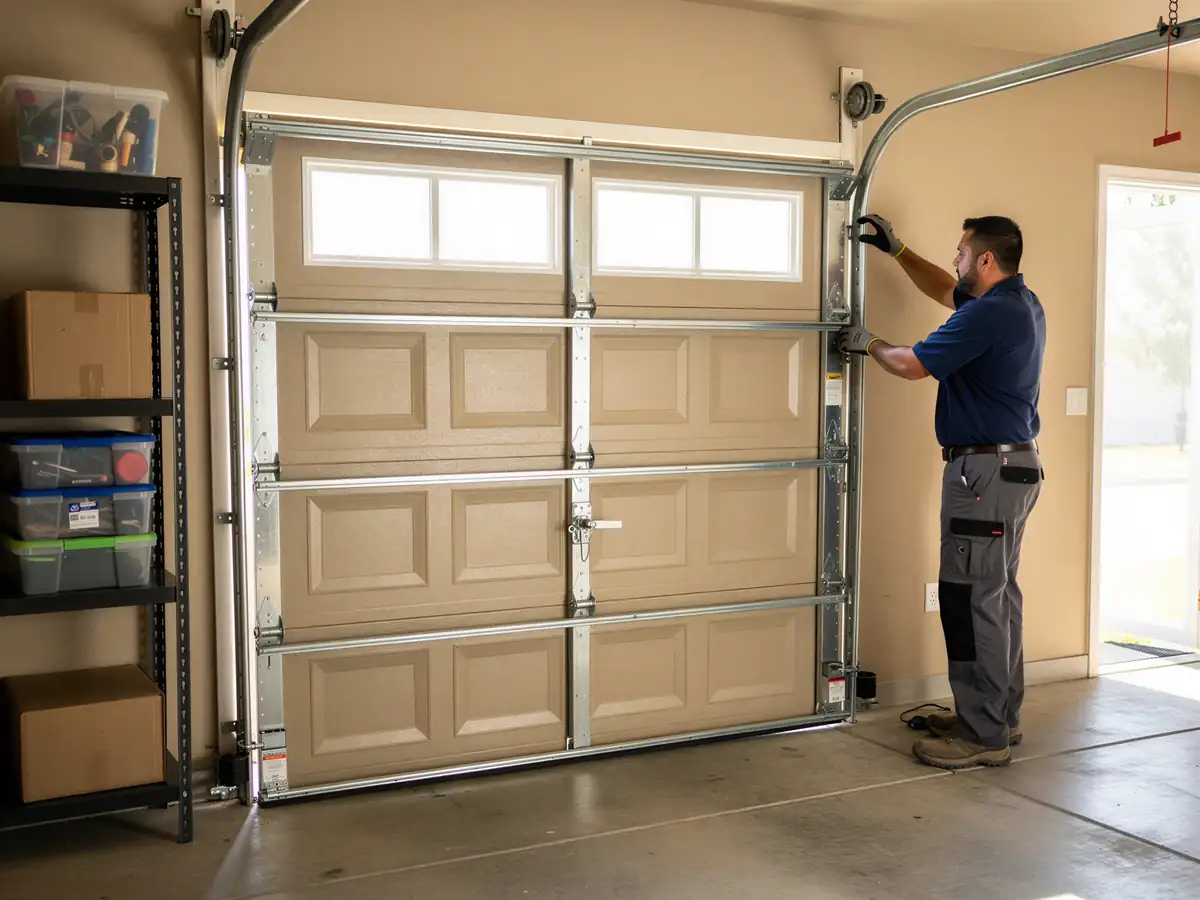
Openers that ran fine in August start grinding or stalling by December, not because the opener failed but because the spring tension drifted as the door's own metal moved with the temperature. On a door built when Woodstock's median home went up, in 1984, there's usually no insulation layer to buffer any of that movement, so the swing shows up directly in how the door balances. Check balance twice a year if the door is original - disconnect the opener, lift it by hand, and see where it wants to stop.
What the Weather Here Does to It
A cold-moderate climate doesn't mean dramatic, but it does mean condensation, and condensation is the part owners miss. When a bare steel door with no insulation layer sits against warmer, damper garage air and the outside temperature drops overnight, moisture beads on the inside face of the panel. Over years, that moisture finds the bottom corners and the track brackets first, since those are the coldest points on the assembly.
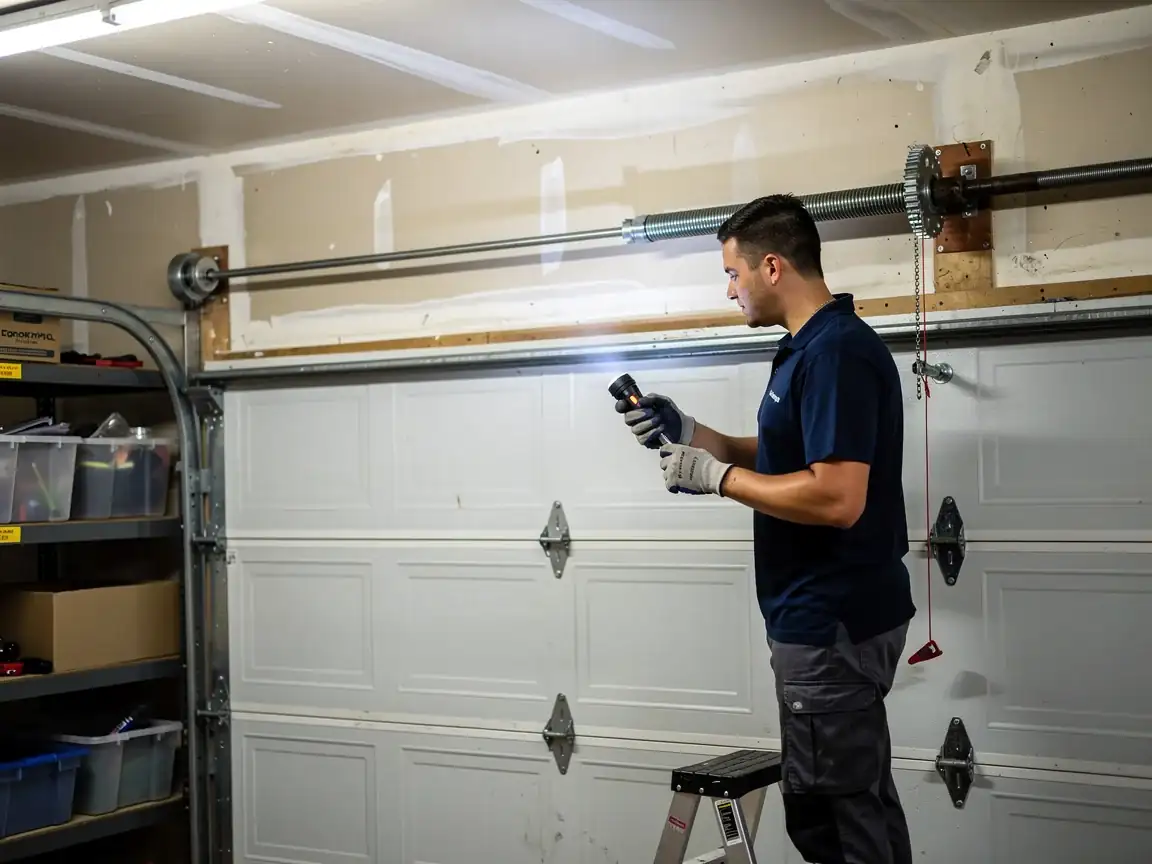
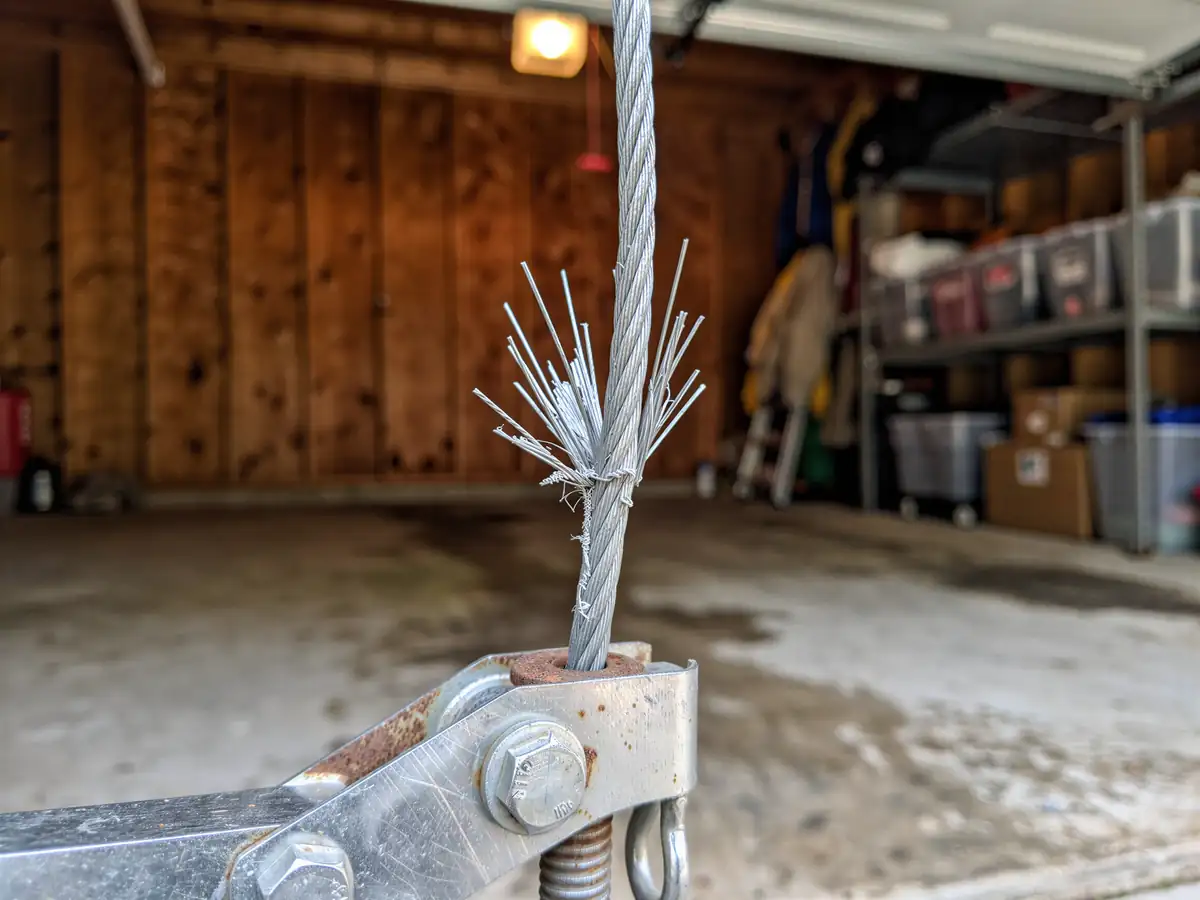
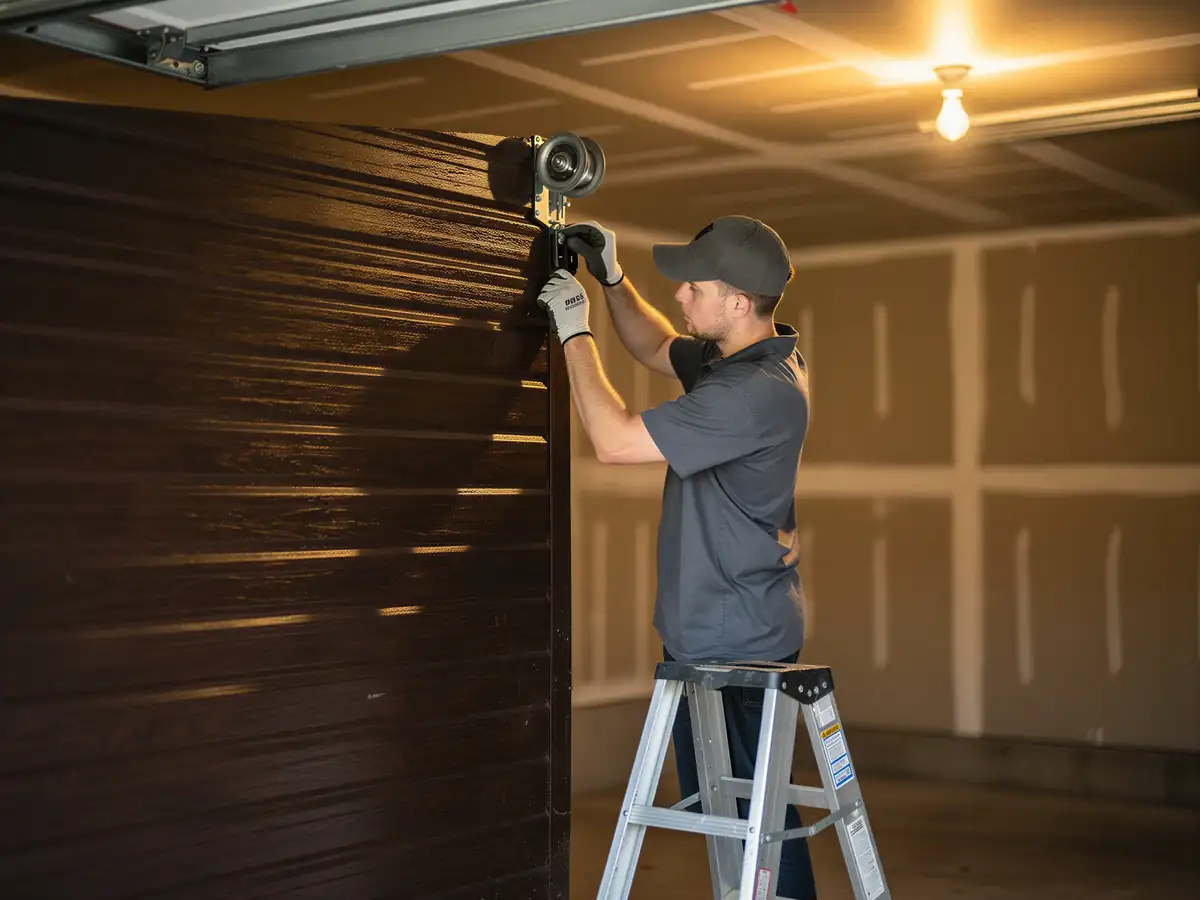
On the 1980s and 90s stock that makes up most of Woodstock's housing, we see the result as rust starting at the track mounting bolts and the bottom roller brackets, well before the panel itself shows any damage. It's slow. It doesn't announce itself the way a snapped spring does. But a track bracket that's lost half its bolt thread to rust corrosion will eventually let the door run off-square, and that's a cable or roller failure waiting to happen, not just a cosmetic issue. If your door is original to a house from that build window, that's the spot worth a flashlight and five minutes, not the spring.
What Is Going On
Put together, it's a straightforward pattern: Woodstock's housing mostly dates to 1964-2007, the bulk of it clustered in the 1980s and 90s, built before insulated garage doors were anything close to standard. That bare steel doesn't handle the cold-moderate swings and condensation the way an insulated door does, and the wear shows up first at hinges, track bolts, and spring tension rather than in the panel itself.
Here's the honest limitation: an insulation retrofit kit glued into an old bare panel helps with temperature swing, but it does nothing for a bottom seal that's already cracked or a track that's already rusted at the bolts. If those are gone, you're better off pricing a full door than layering foam into one that's failing at the hardware. We'll tell you straight which side of that line your door is on rather than sell a kit that won't fix the actual problem. If you want someone to look at it before deciding, the quickest way to reach us is through the site at /.