What to Check
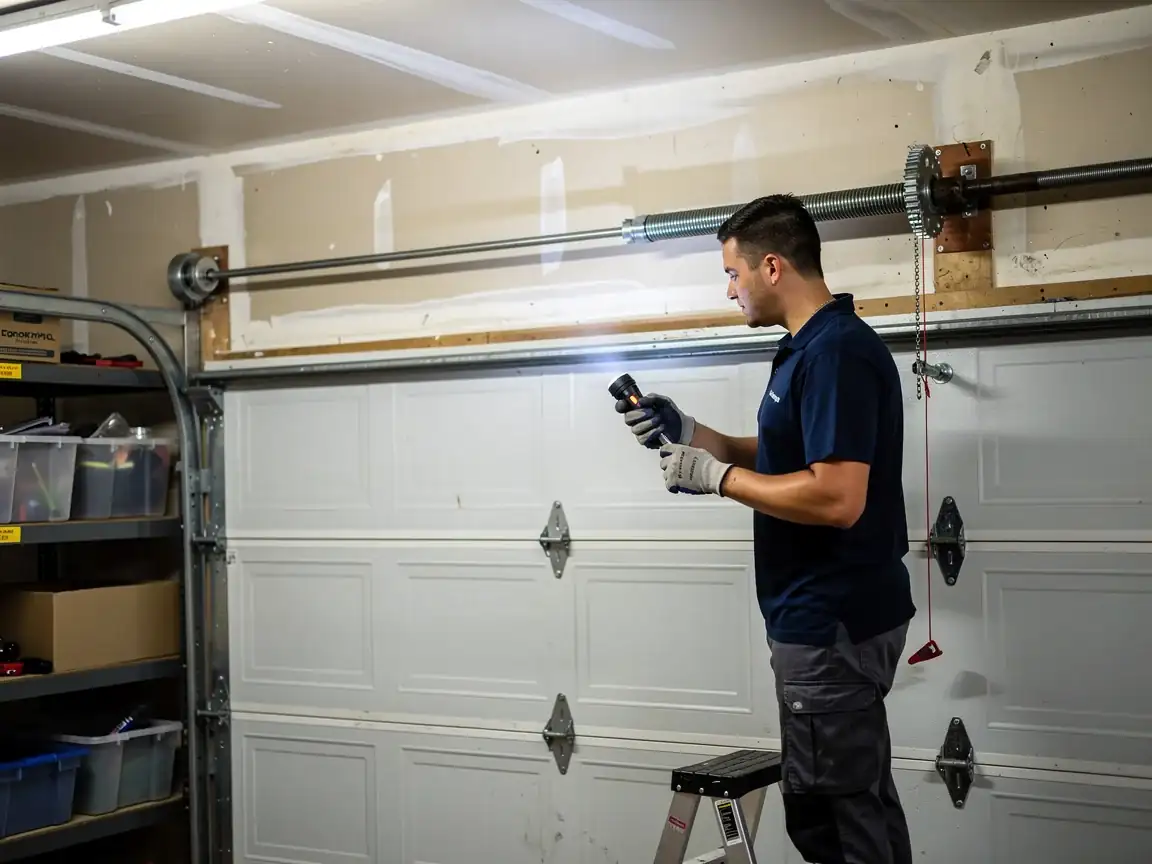
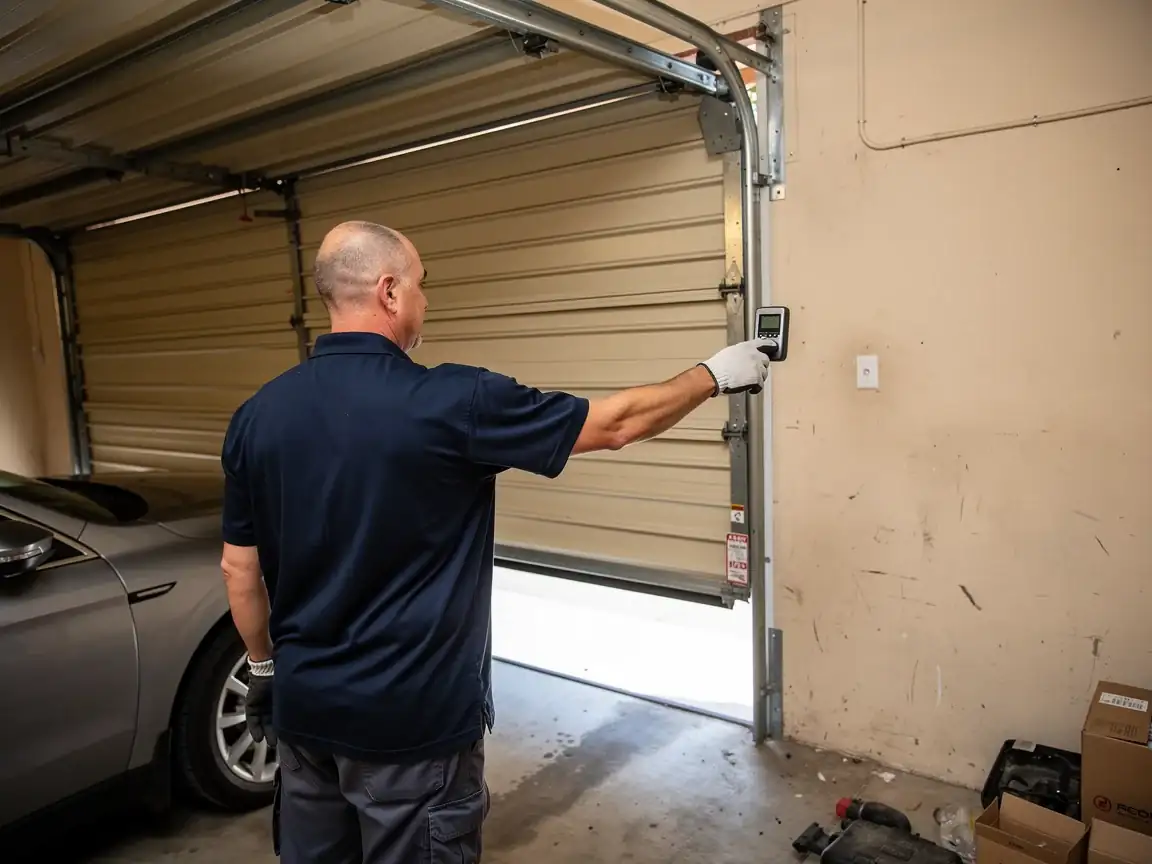
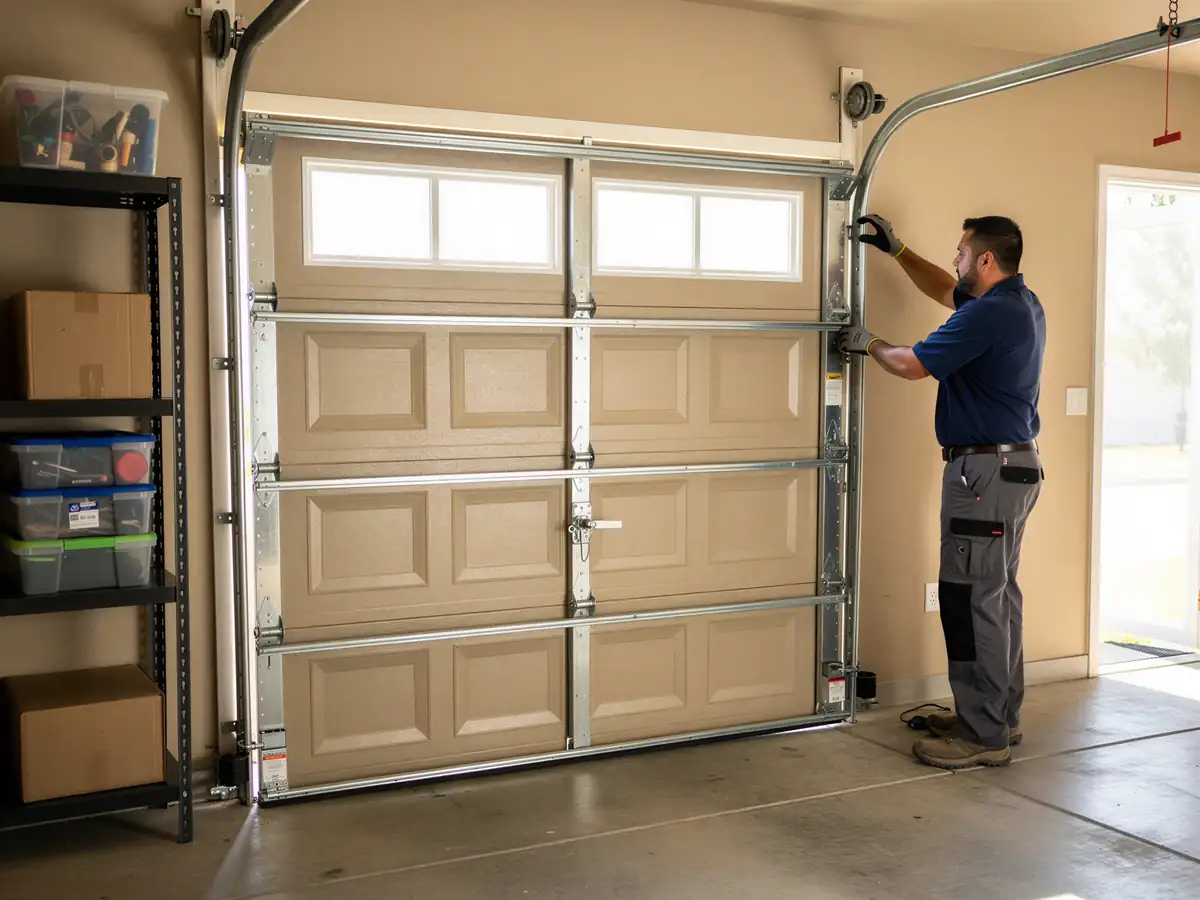
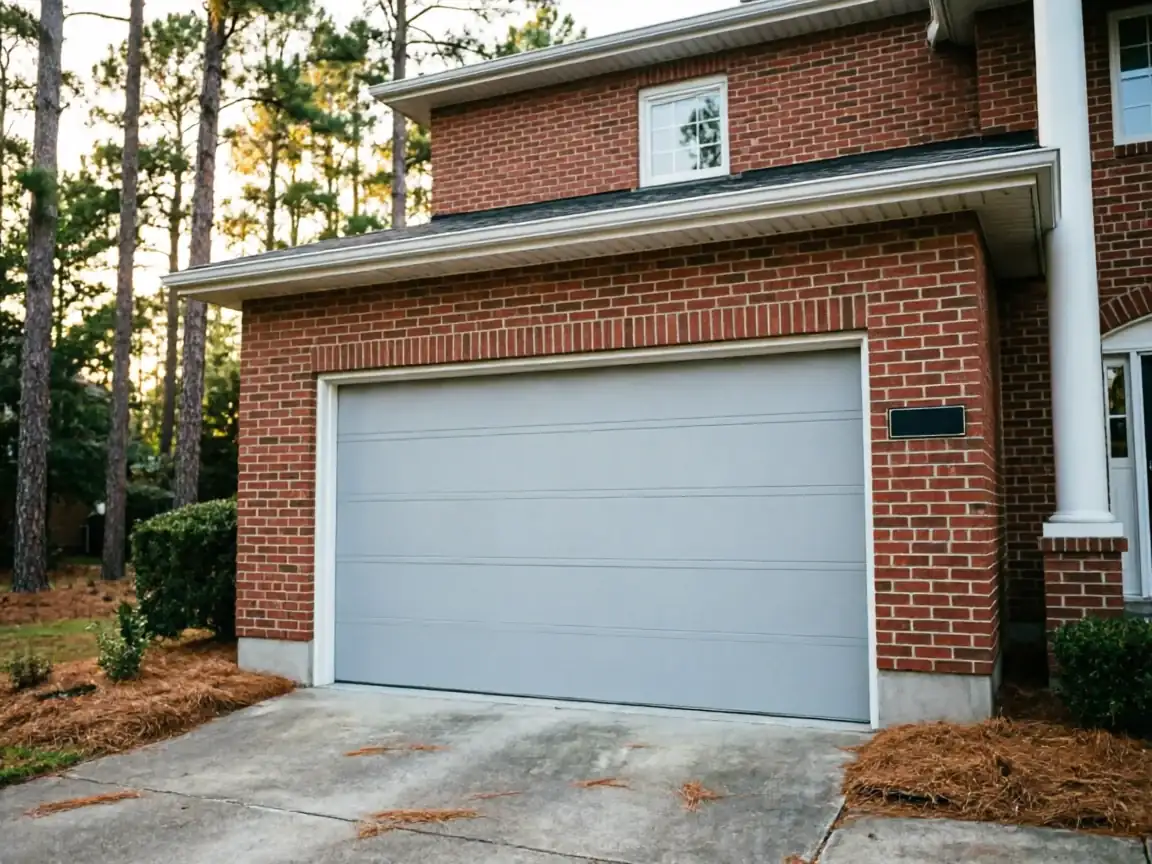
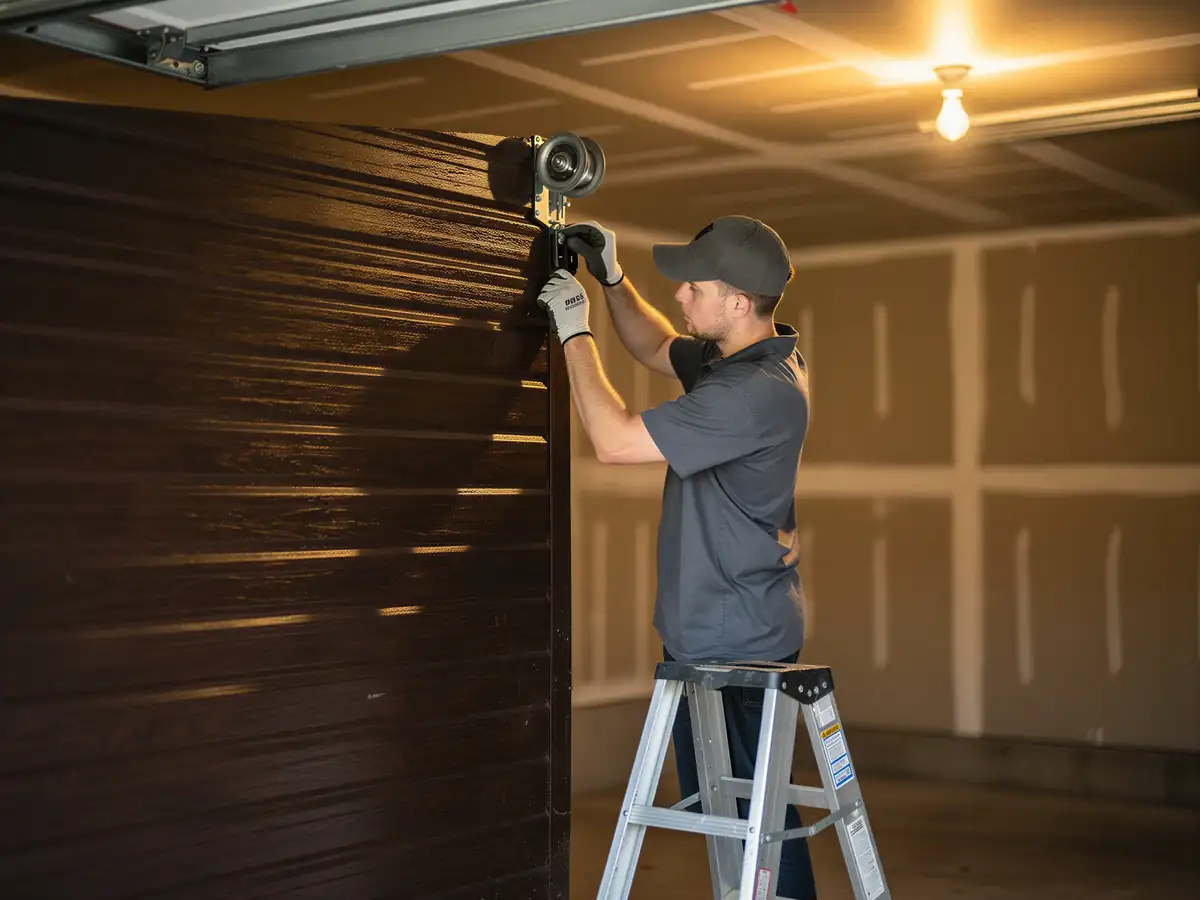
Most of the houses we work on in Woodstock went up between 1964 and 2007, with the bulk clustered in the 1980s and 90s build boom that filled in the nine areas around town. That matters because the hardware age is predictable. If your door is original to a house from that stretch, you're likely looking at a torsion spring system that's 20 to 40 years old, steel rollers instead of nylon, and a track set that was never upgraded. Start by watching the door move through one full cycle with the light on. A grinding sound at the top usually points to the rollers themselves, worn flat on one side from decades of the same travel path. A sharp pop on the way down, especially near the middle of the track, is often a loose hinge screw working its way out of wood jambs that have dried and shrunk over the years - common in that 80s-era framing. Don't force the door past a noise you can't explain. If it hesitates or reverses mid-cycle, stop using the opener until someone looks at the spring tension.
What the Weather Here Does to It
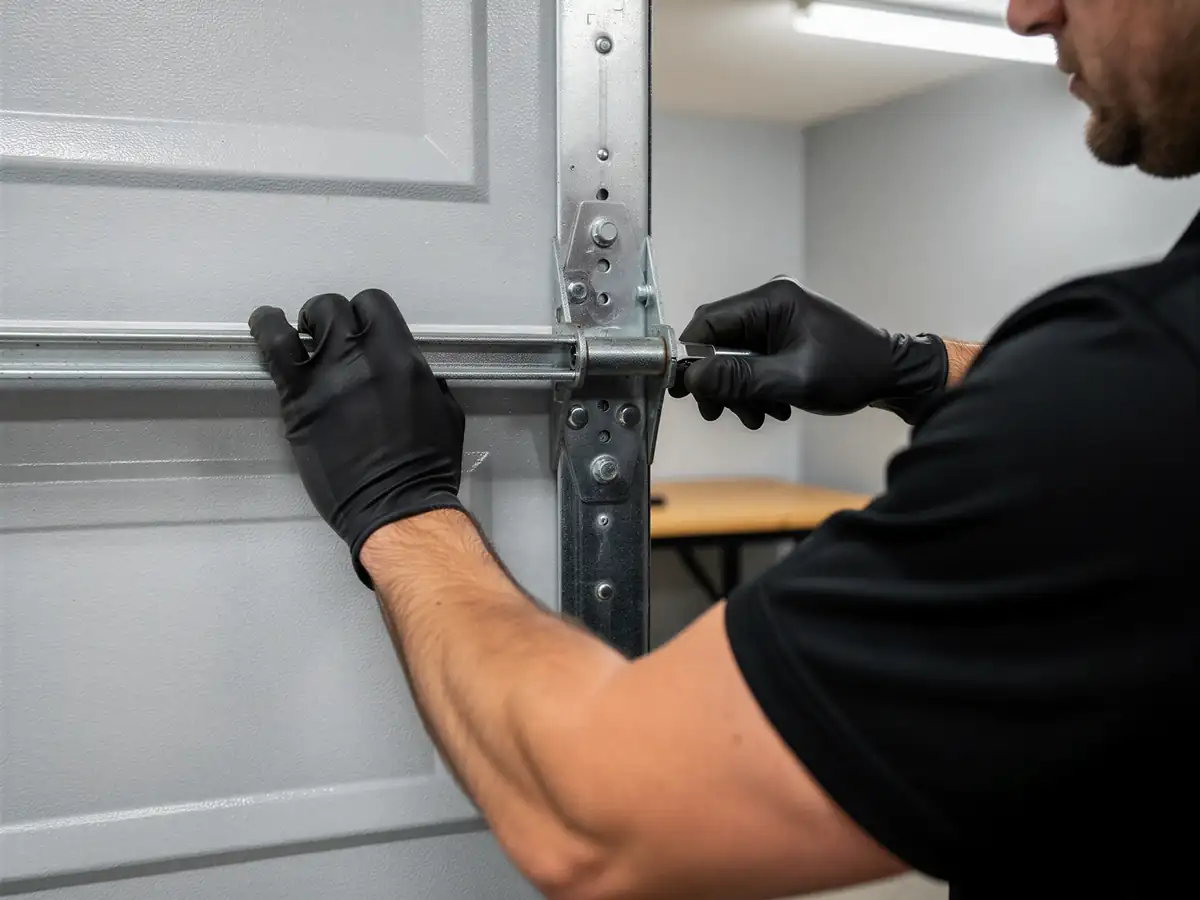
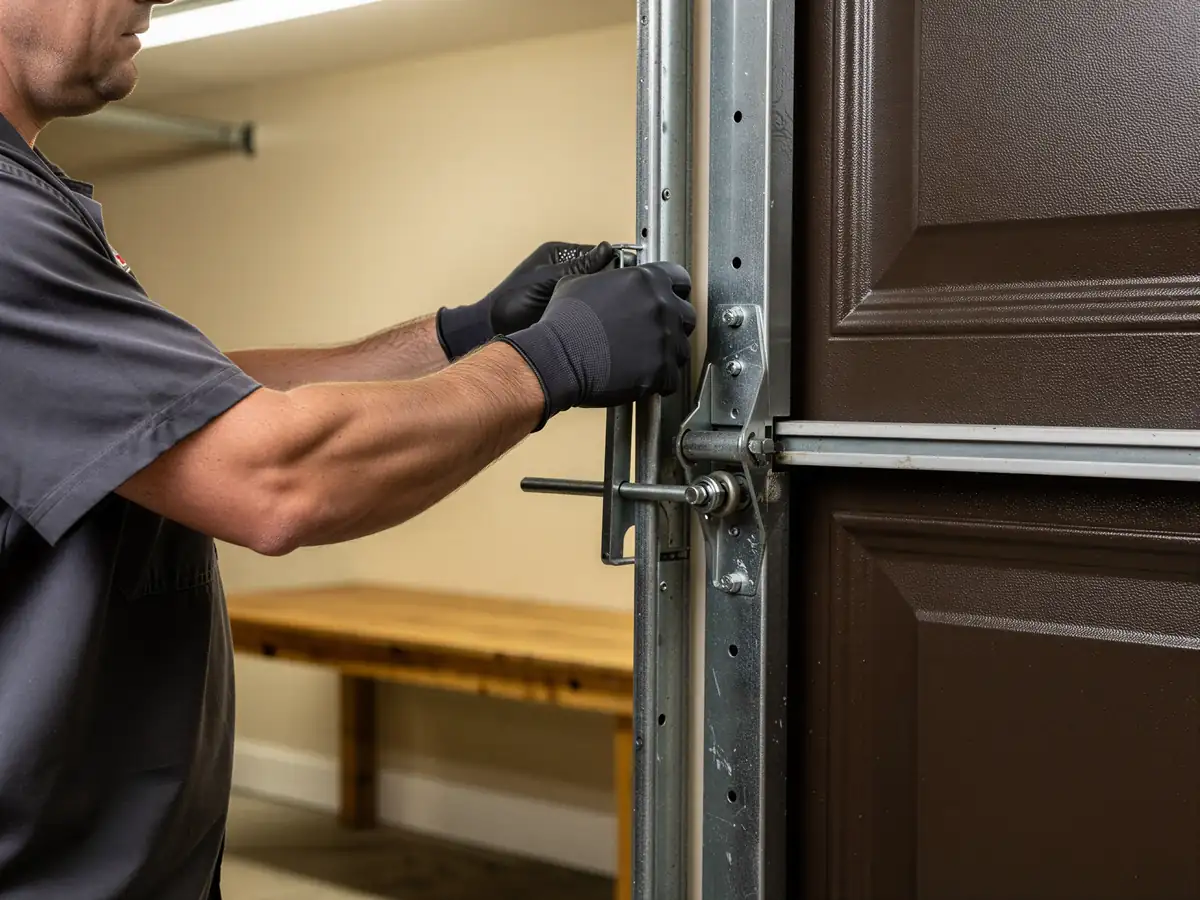
The cold-moderate climate here means the real damage isn't dramatic cold snaps - it's humidity moving through wood jambs and steel track brackets season after season. Houses built in the 1964-2007 window, especially the ones from the 1980s and 90s that make up most of the stock in this area, often have track brackets lag-bolted into framing that's moved slightly with decades of moisture swings. That shows up as a rhythmic knock, once per rotation of the drum, as the bracket flexes under load instead of holding rigid. It's different from a bent track, which makes a consistent scrape in one spot rather than a knock that repeats. Rust at the bottom bracket, where water sits after rain runs off the slab, is another thing specific to doors this age - the galvanized coating on older rollers and end bearings wears through eventually, and once it does, corrosion moves fast in a humid stretch.
What Is Going On
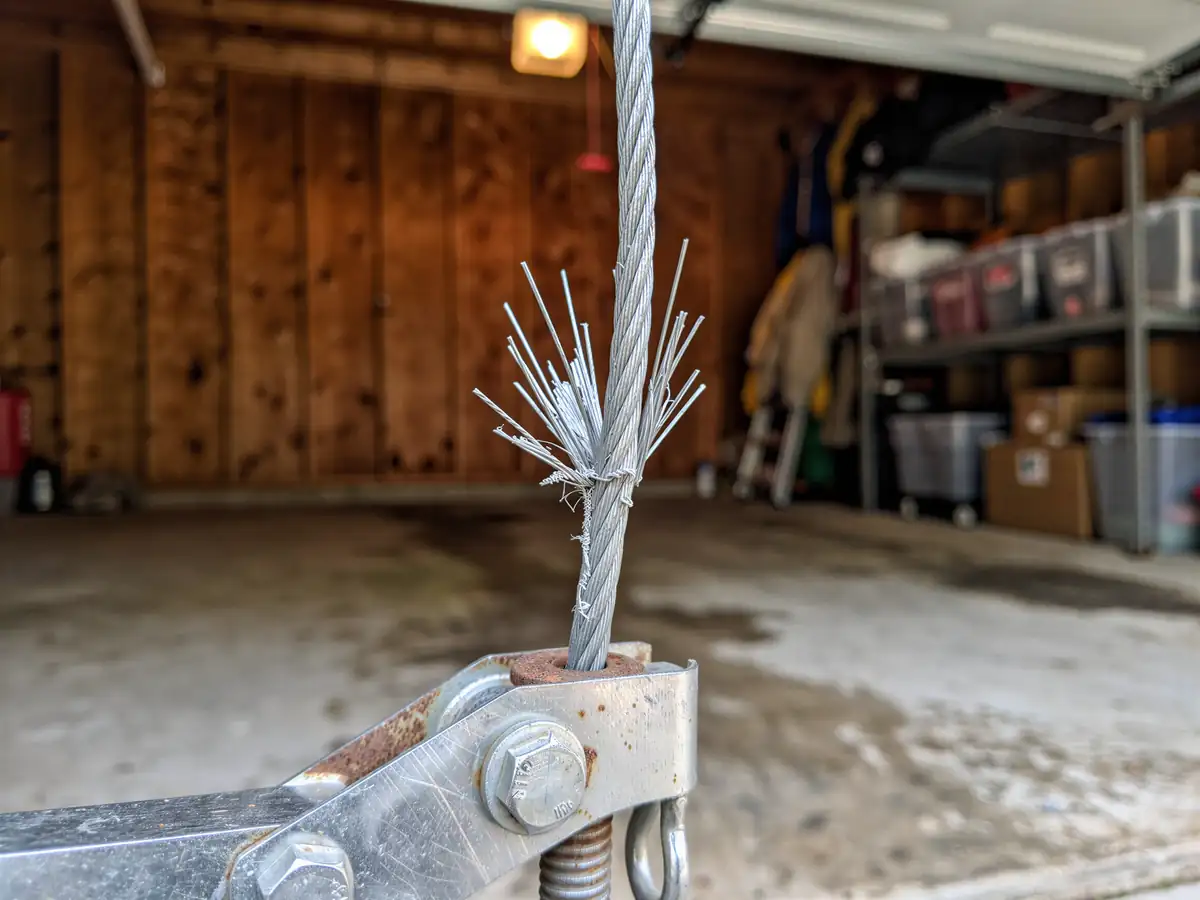
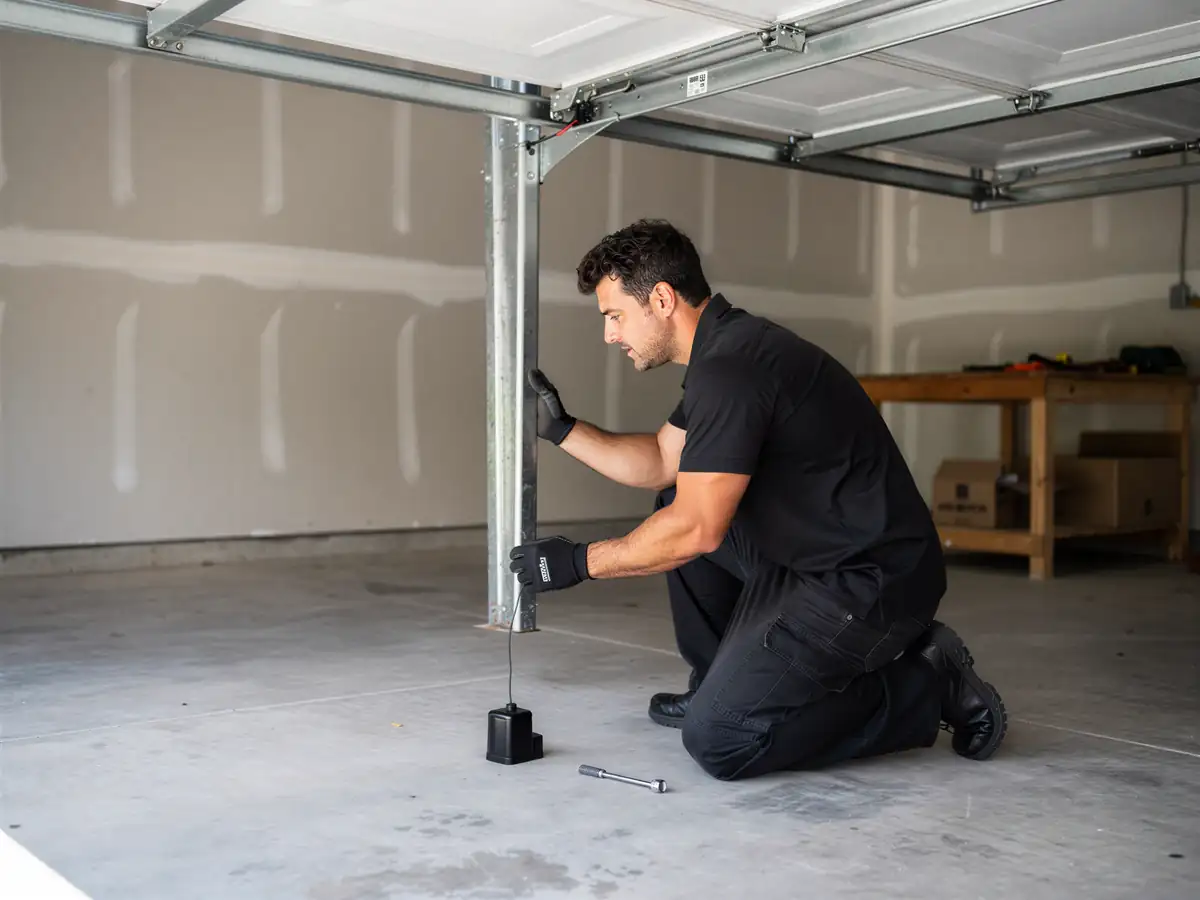
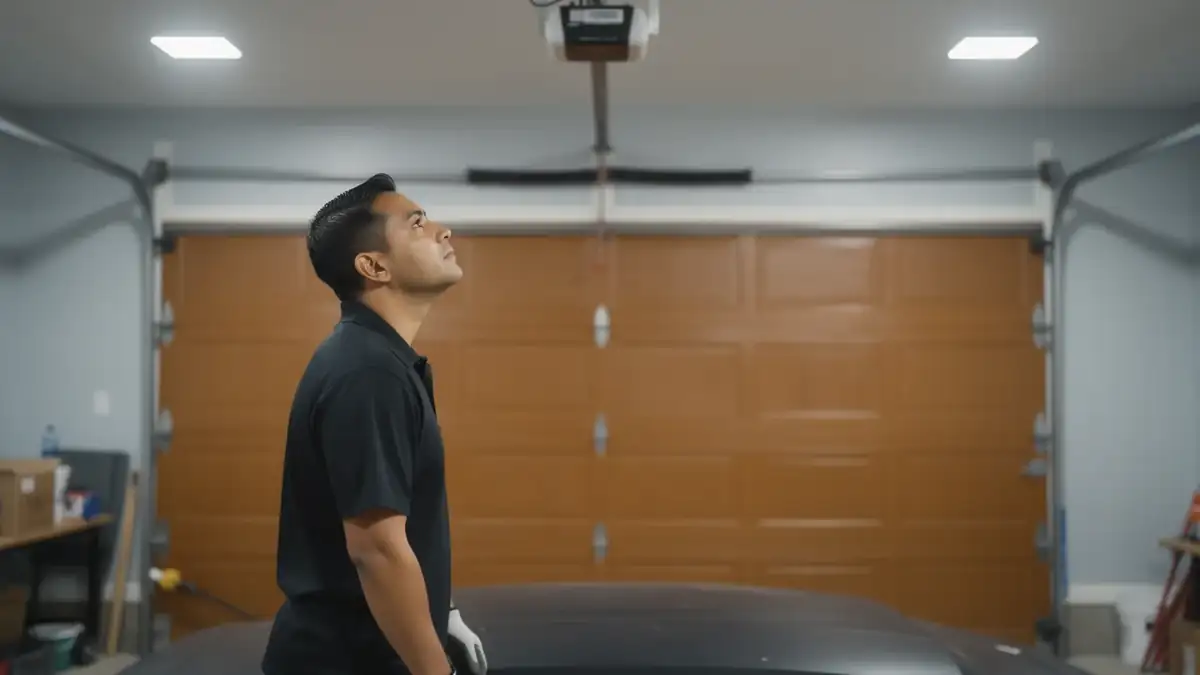
Put the clues together and most noise complaints on houses from this era trace back to three things: dry torsion springs, worn rollers, or a bracket that's loosened from the jamb over time. None of those are emergencies by themselves, but ignored long enough, a dry spring under tension is the one that can let go without warning, and that's not a DIY tighten-it-yourself job - torsion springs carry enough stored force to cause real injury. Here's the honest limit: if your door is original to a house built in that 1964-2007 range and the spring has never been serviced, we're usually recommending replacement of the spring set over a patch repair, because the fatigue cycle on 20-to-40-year-old coil steel doesn't reset with a little oil. A rattle in the opener chain, on the other hand, is almost always a tension adjustment, five minutes, done.