Parts We Carry
Rollers aren't one part. We stock plain steel rollers, sealed-bearing steel rollers, and nylon rollers with sealed bearings, in the short-stem and long-stem lengths that show up on the doors common to this area's housing stock. Most of the homes we work on went up between 1964 and 2007, with a lot of that build concentrated in the 1980s and 90s, so the track widths and roller stems we carry are sized for that era's standard sectional doors, not for older barn-style or newer high-cycle commercial units.
Steel rollers are the cheaper fix and fine for a door that only opens a few times a day. Nylon sealed-bearing rollers cost more per unit but run quieter and don't need the yearly oiling that bare steel does. We'll tell you straight which one fits the door in front of us rather than upselling the nylon set on every job - if the opener is older and the door only gets light use, steel is still a reasonable call.
One limit worth saying up front: if the roller stem has worn the track itself into a wavy or pitted shape, a new roller alone won't fix the symptom. At that point the track needs straightening or replacing, and we'll say so before we close the job out rather than after.
What the Repair Takes
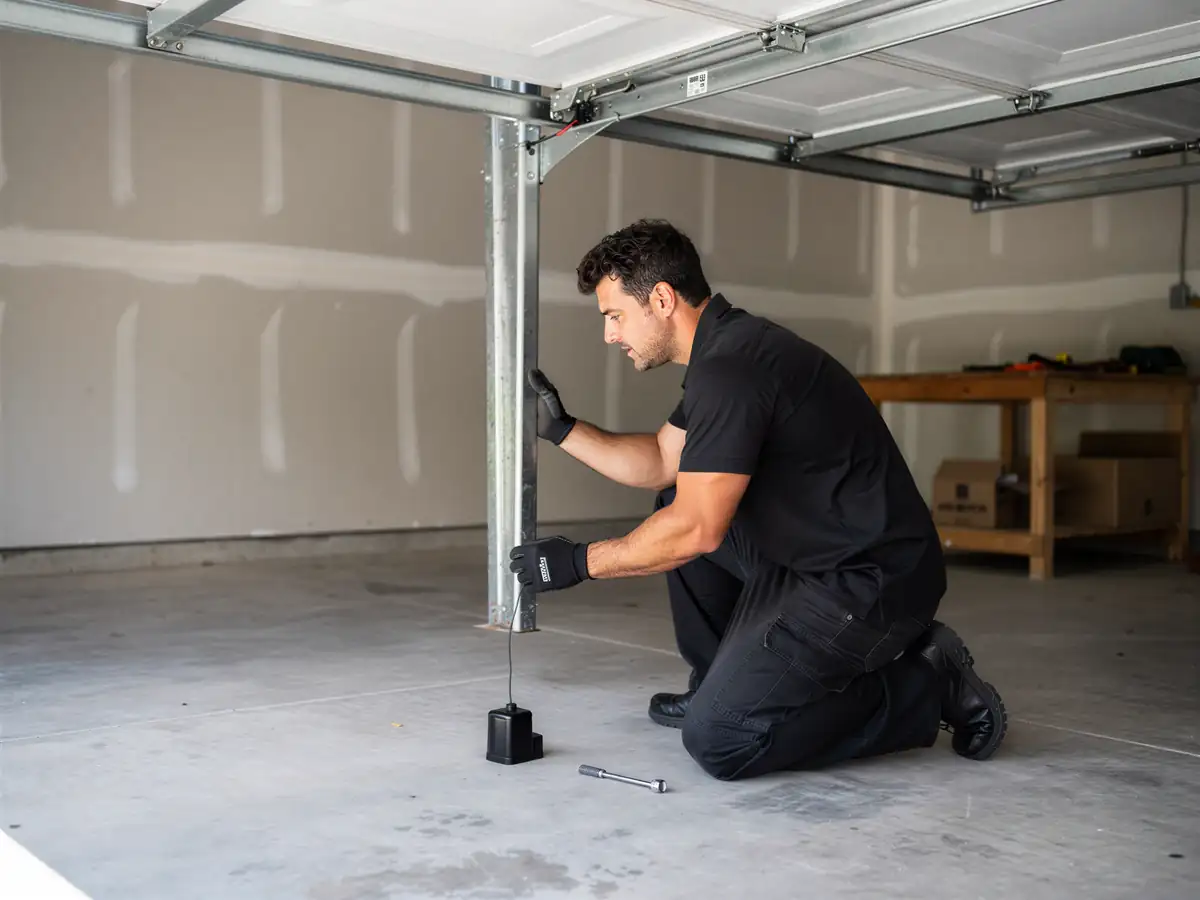
The job starts with the door in the down position and the opener disconnected
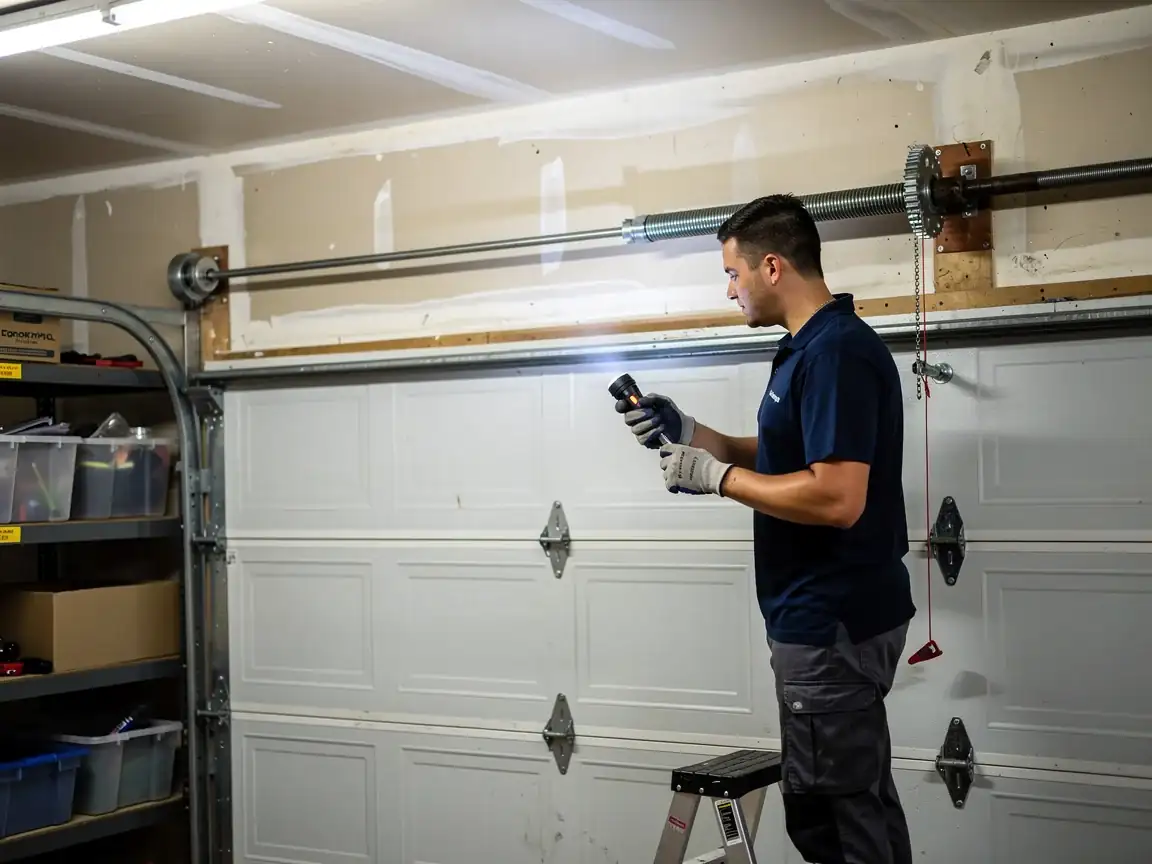
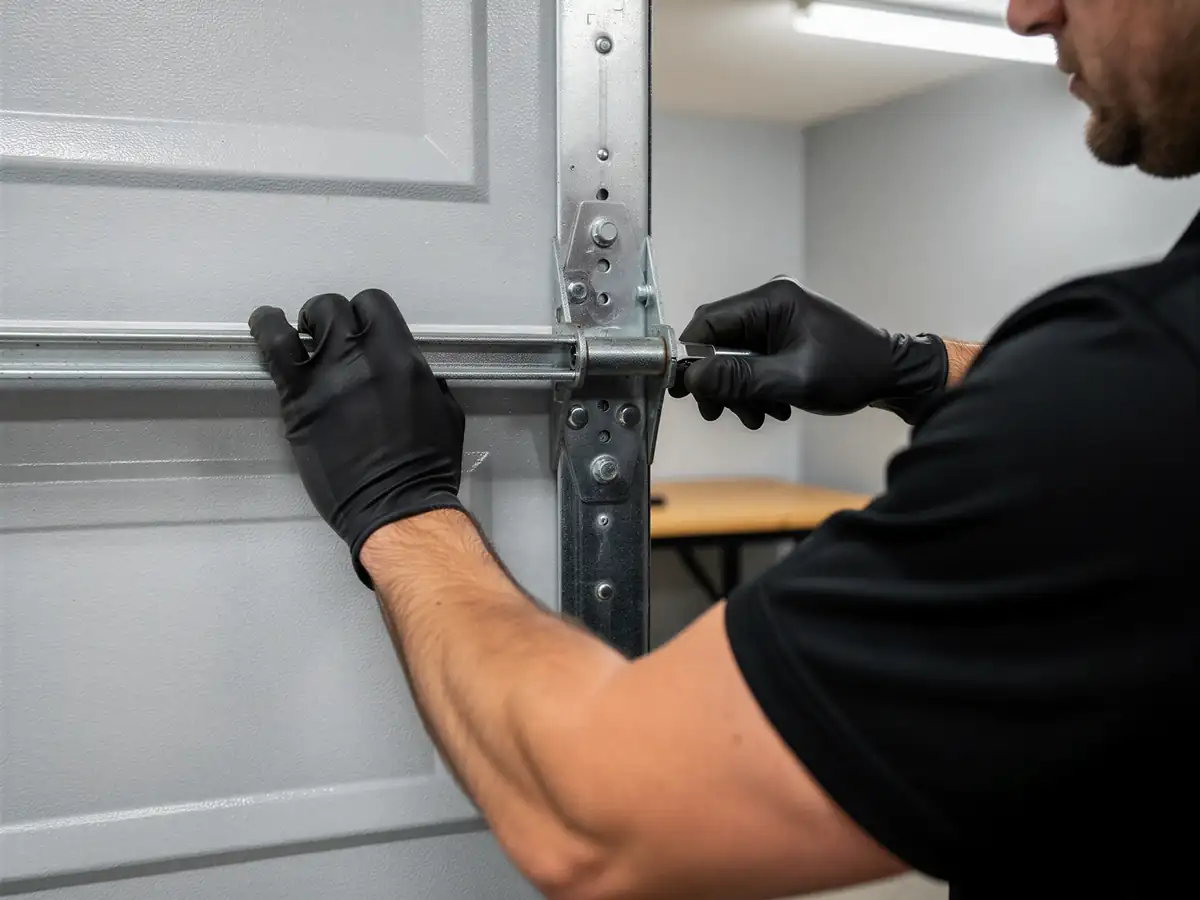
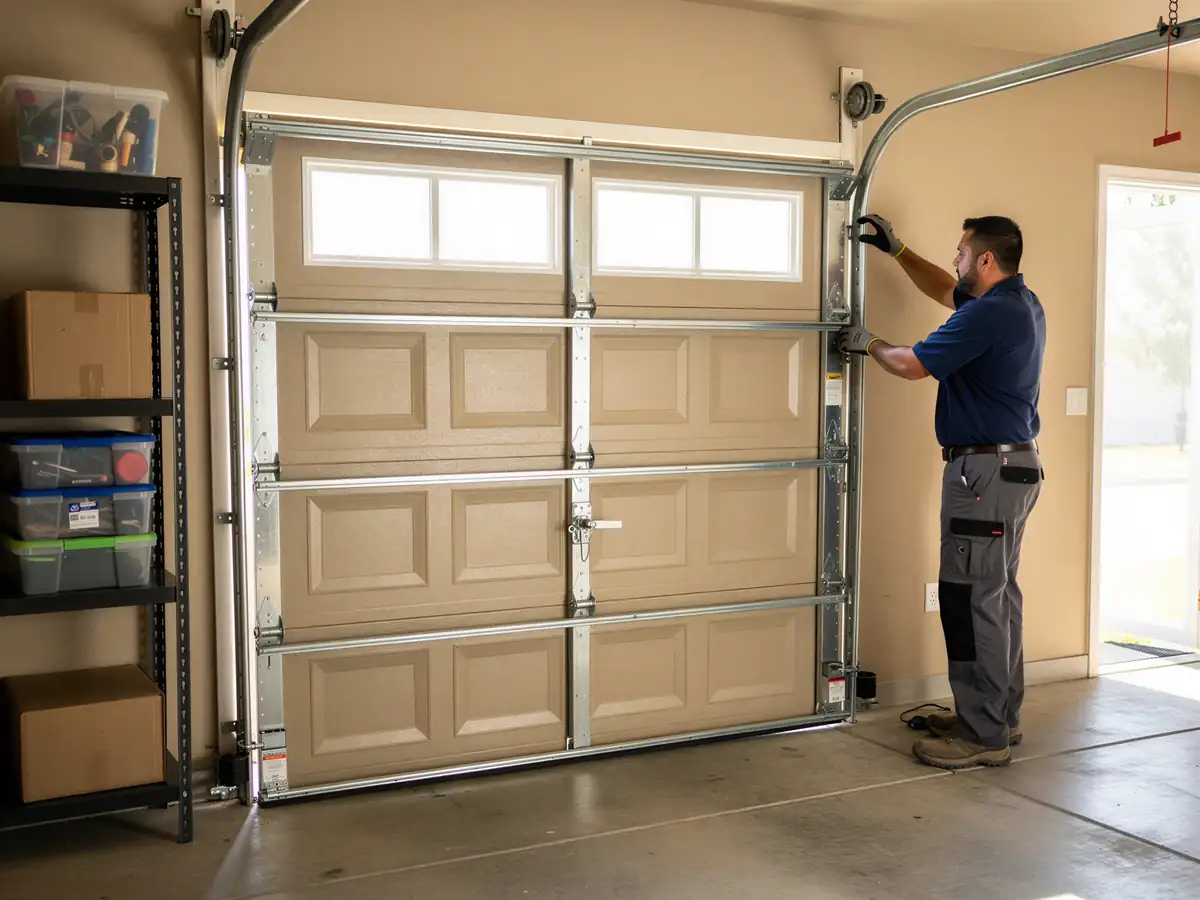
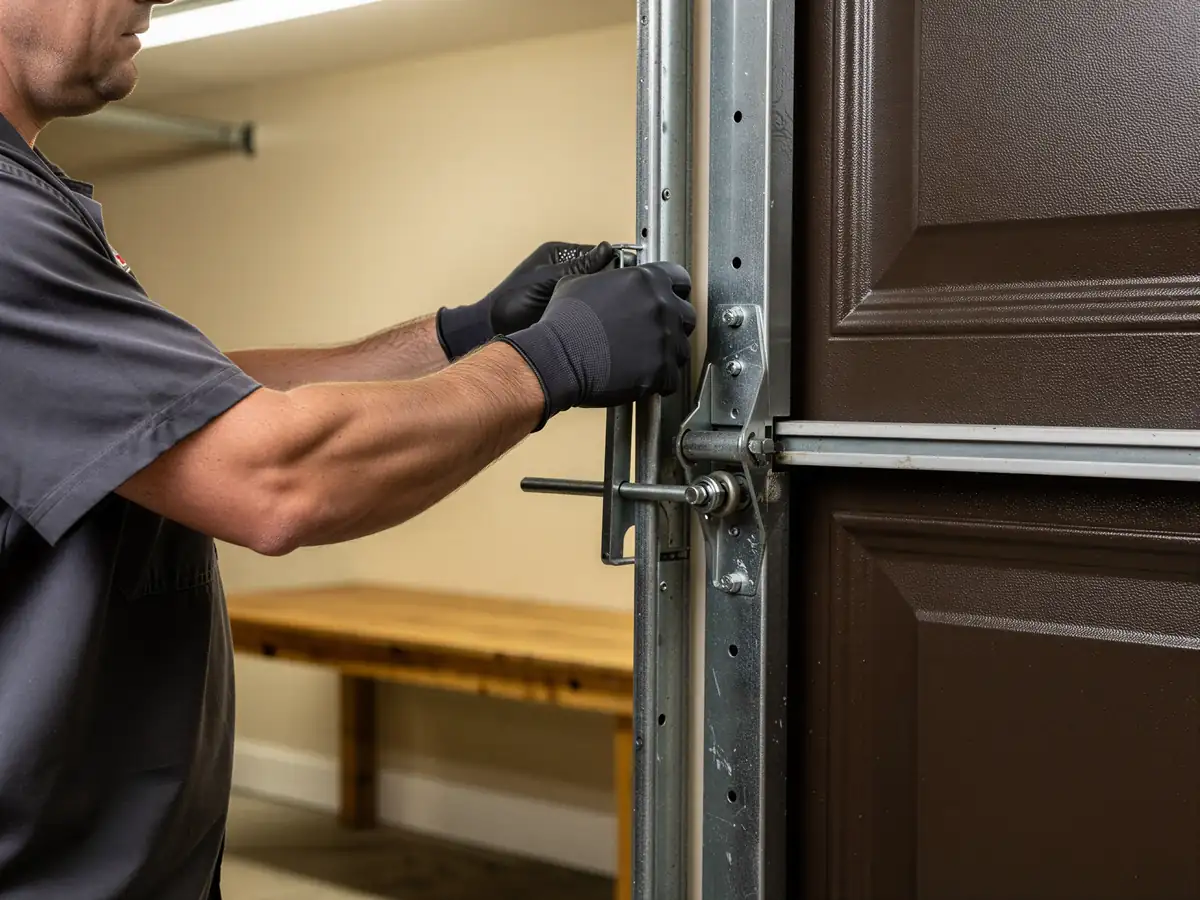
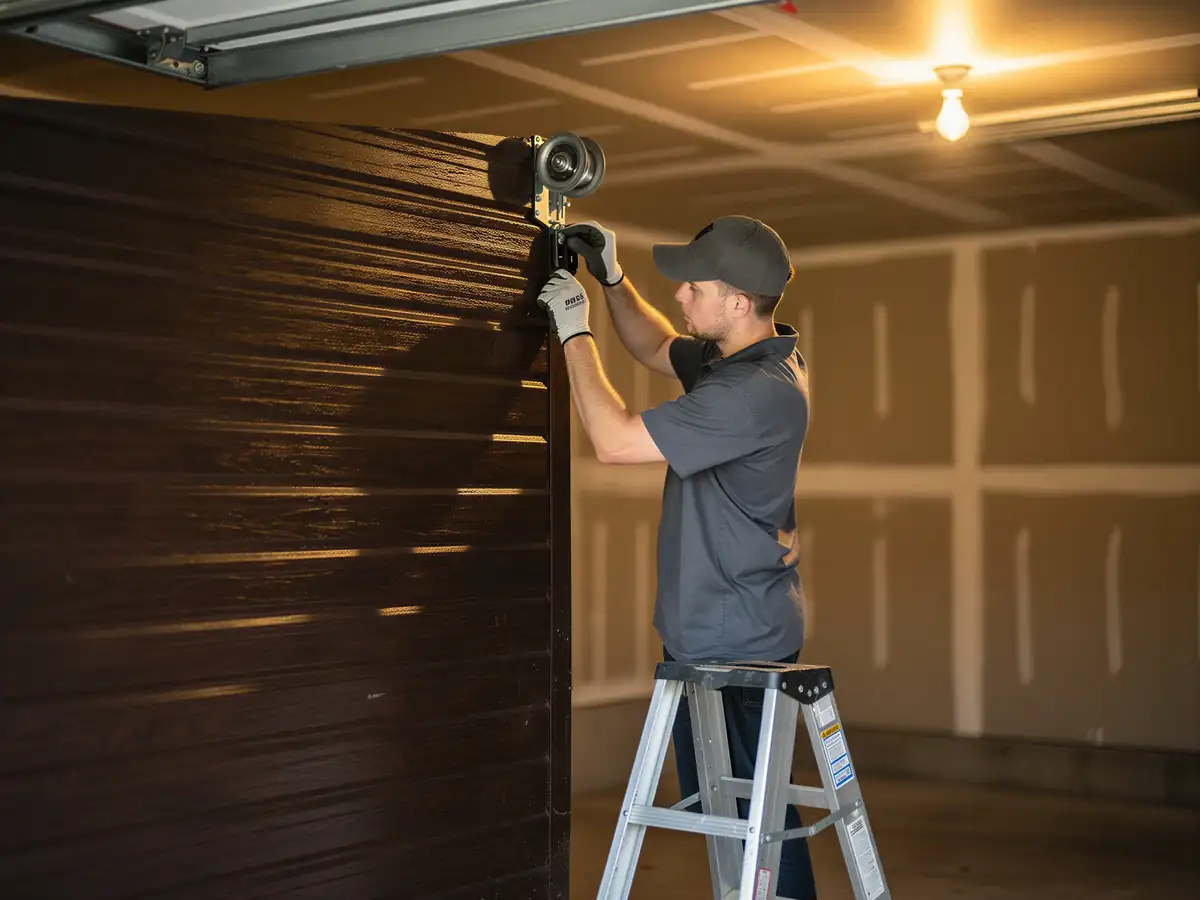
So nothing can cycle while a cable is under tension. We pull one roller at a time, starting at the bottom bracket and working up, so the door panels stay supported by the rollers still in the track on the opposite side. Bottom rollers carry the most load and wear first, so those two usually tell us what's happening to the rest before we've pulled a third.
Each roller gets checked against the track width and the hinge or bracket hole it rides in before the new one goes in
Not every roller on a given door is the same length, especially on doors that have had a partial repair done before. Once all of them are swapped, we run the door through a full open-close cycle by hand first, then reconnect the opener and run it again, listening for the specific spot in the track where the old grinding noise used to happen.
A straightforward four-roller swap on an otherwise sound door and track is a same-visit job
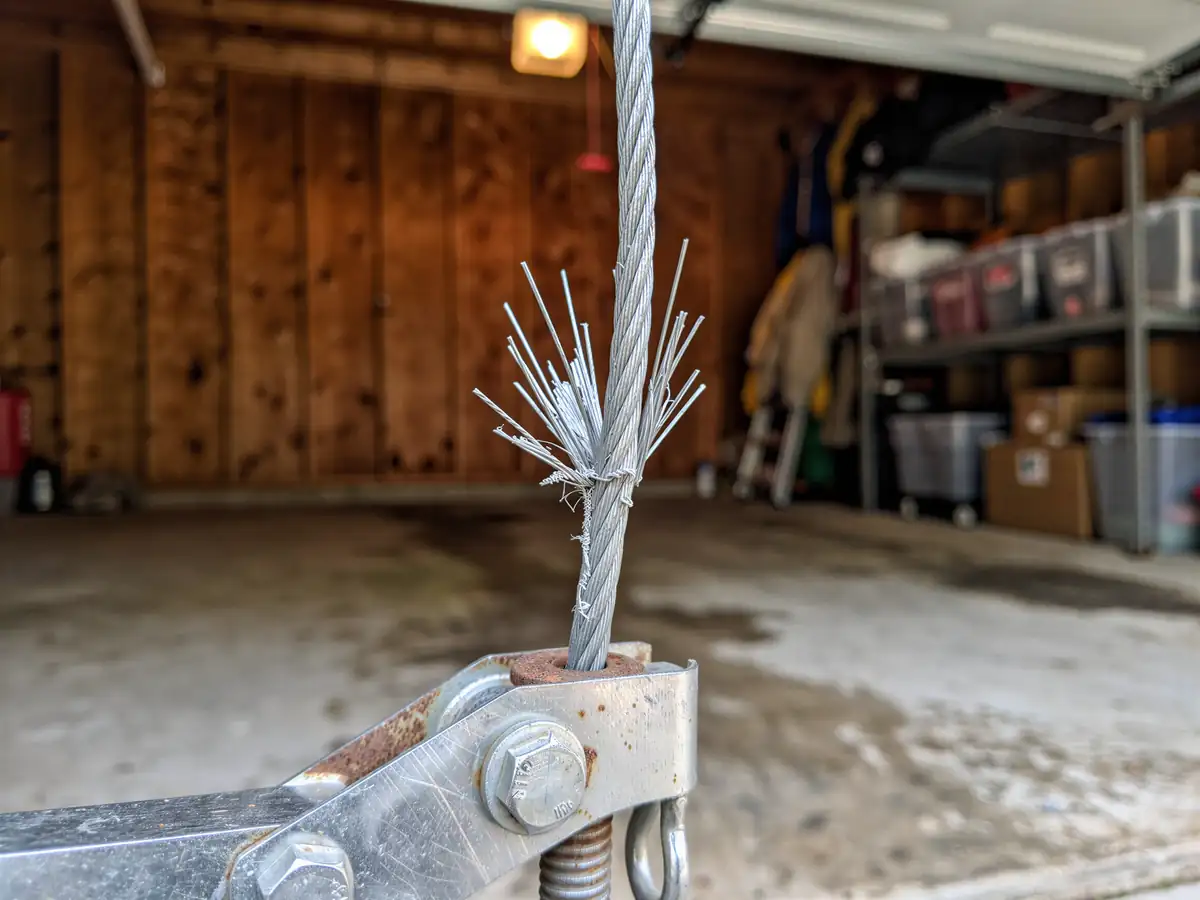
It stops being same-visit the moment the track is bent, the hinges are cracked, or a cable is frayed enough that we won't run the door under power until that's dealt with first - at that point we're quoting a second repair, not finishing the first one.
Why This Fails Locally
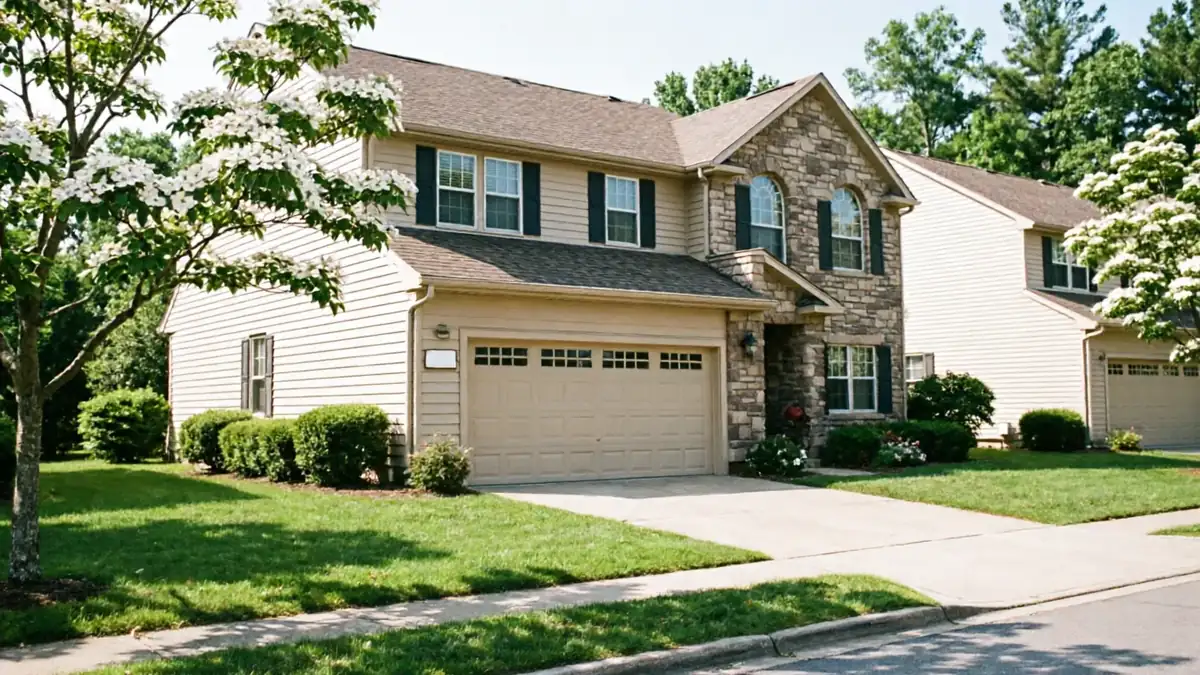
The housing in this service area mostly dates from 1964 through 2007, with the median build year sitting around 1984, and across the nine clusters we cover that 1980s-to-90s stretch is where the bulk of the doors still in service came from. Those doors shipped with plain steel rollers - no bearing, no seal - because that was the standard part at the time, and thirty to forty years later a lot of those original rollers are still in the track, just worn down to a sliver of their original stem diameter.
The climate here is the other half of it. This is a cold-moderate band: not brutal, but enough freeze-thaw swing through the winter that steel rollers without bearings seize slightly overnight, get forced through a stiff track on the first open of the morning, and wear unevenly on one side of the stem. Over enough winters that uneven wear turns into a roller that's bent, a track that's scored, or both.
With 12,708 owner-occupied houses across the service area built mostly in that same window, we see the same failure pattern on a lot of doors that have otherwise never had a problem - it's not damage, it's just the original part reaching the end of what a steel roller on a cold-swing climate was ever going to give.
The Symptom
It usually starts as a grinding or rumbling noise right as the door passes a specific point in the track, not a smooth sound the whole way up. That one spot is where a worn roller is riding on a flattened or chipped edge instead of rolling cleanly. As the wear gets worse, the door slows down at that same point, sometimes stuttering, sometimes needing the opener motor to push through it.
In the next stage the door starts to walk - it shifts slightly sideways in the track instead of traveling straight up, which you'll notice as a gap that opens and closes unevenly between the door edge and the frame. That's a roller that's worn enough to have play in the track, not just noise. Left alone, it stresses the hinge and bracket it's seated in, and eventually a roller stem snaps or pulls loose entirely, which can jam the door mid-cycle.
If you're already hearing the grinding but the door still travels the full distance smoothly otherwise, this is roller wear, not a spring or cable problem - different noise, different fix, and usually a smaller bill if it's caught at that stage rather than after the roller lets go.