Parts We Carry
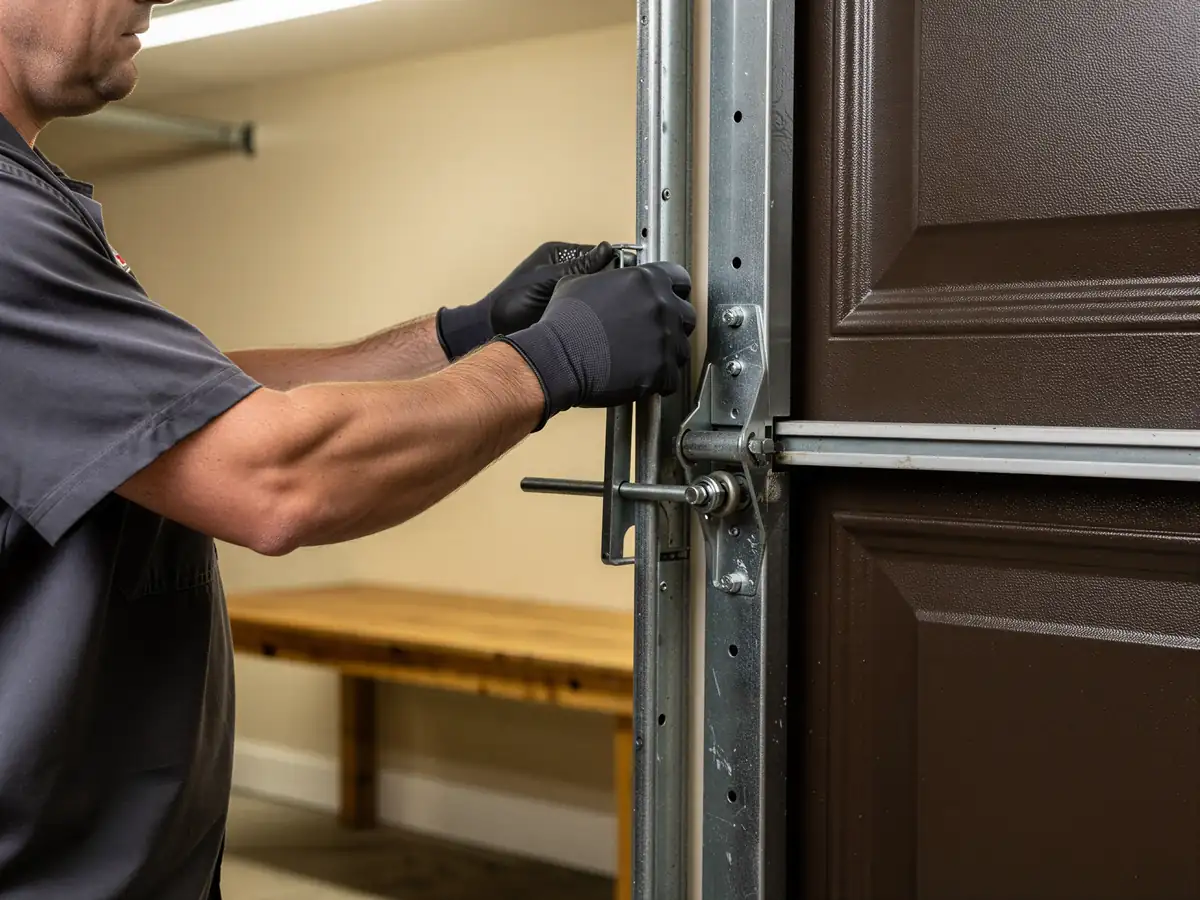
An off-track door almost never comes down to one bad part. We carry galvanized track sections in the standard residential widths, nylon and steel rollers, roller brackets, hinges (end, intermediate, and center), and the lag bolts and carriage bolts that hold track to the jamb. Most houses across this service area were built between 1964 and 2007, with the heaviest concentration going up in the 1980s and 90s. That means a lot of doors still running the original steel rollers and stamped-steel brackets from that build era - parts that have had thirty-plus years of seasonal movement to work loose or wear oval. We stock both roller types because swapping steel for nylon is often part of the fix, not just a repair but a quieter, smoother door going forward. We also carry replacement bottom brackets and cable drums, since a door that's jumped track sometimes takes a cable with it. What we don't carry on the truck is full replacement track for commercial or oversized doors - those get special-ordered, and we'll tell you that up front rather than make you wait at the curb while we pretend otherwise.
What the Repair Takes
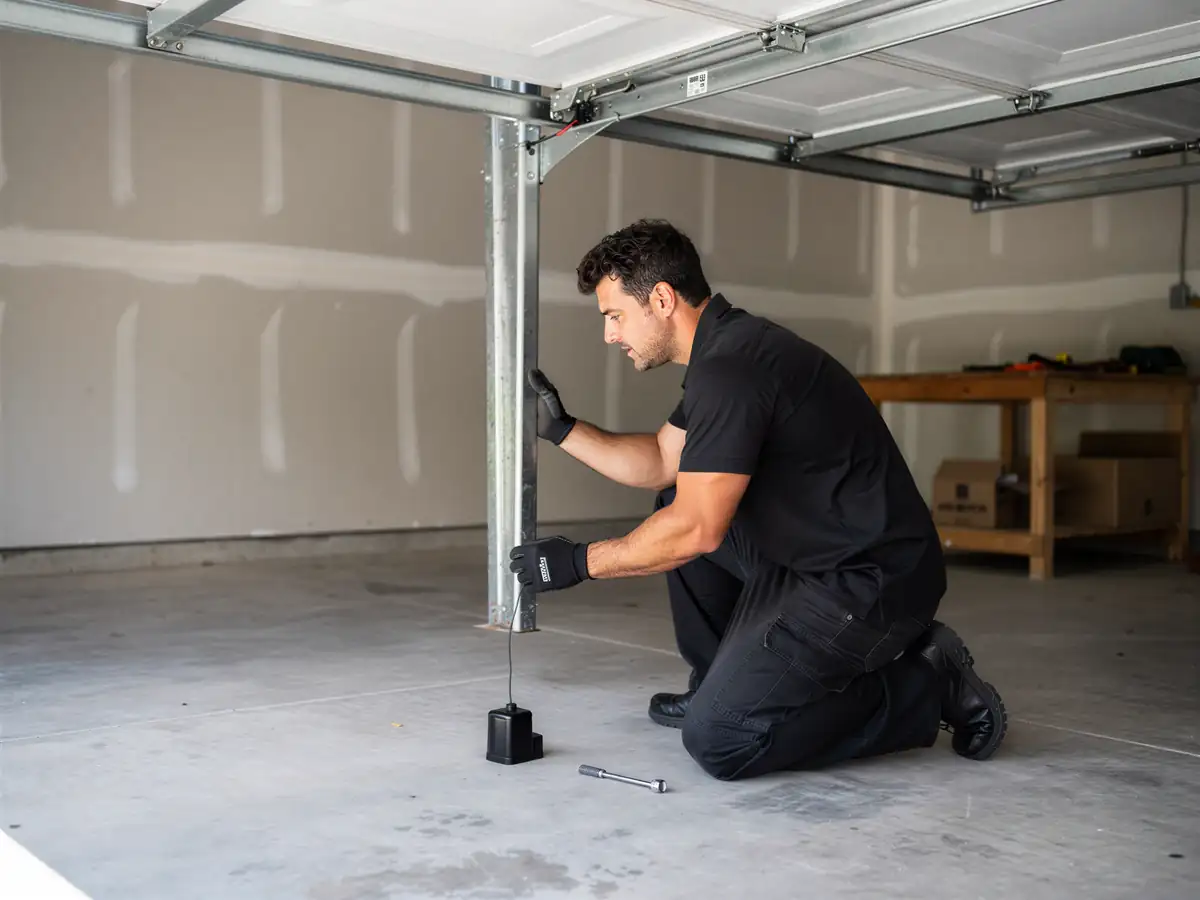
First we check whether the door is actually off the track or just binding against it
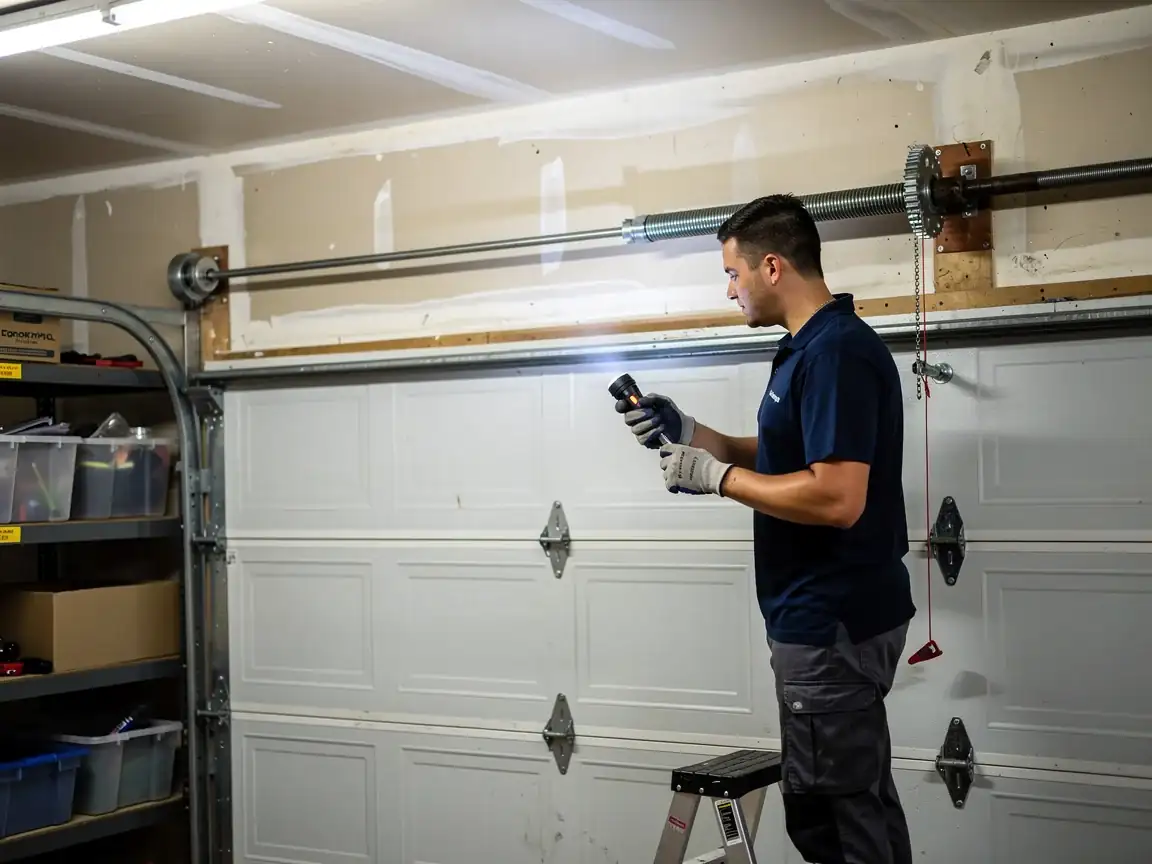
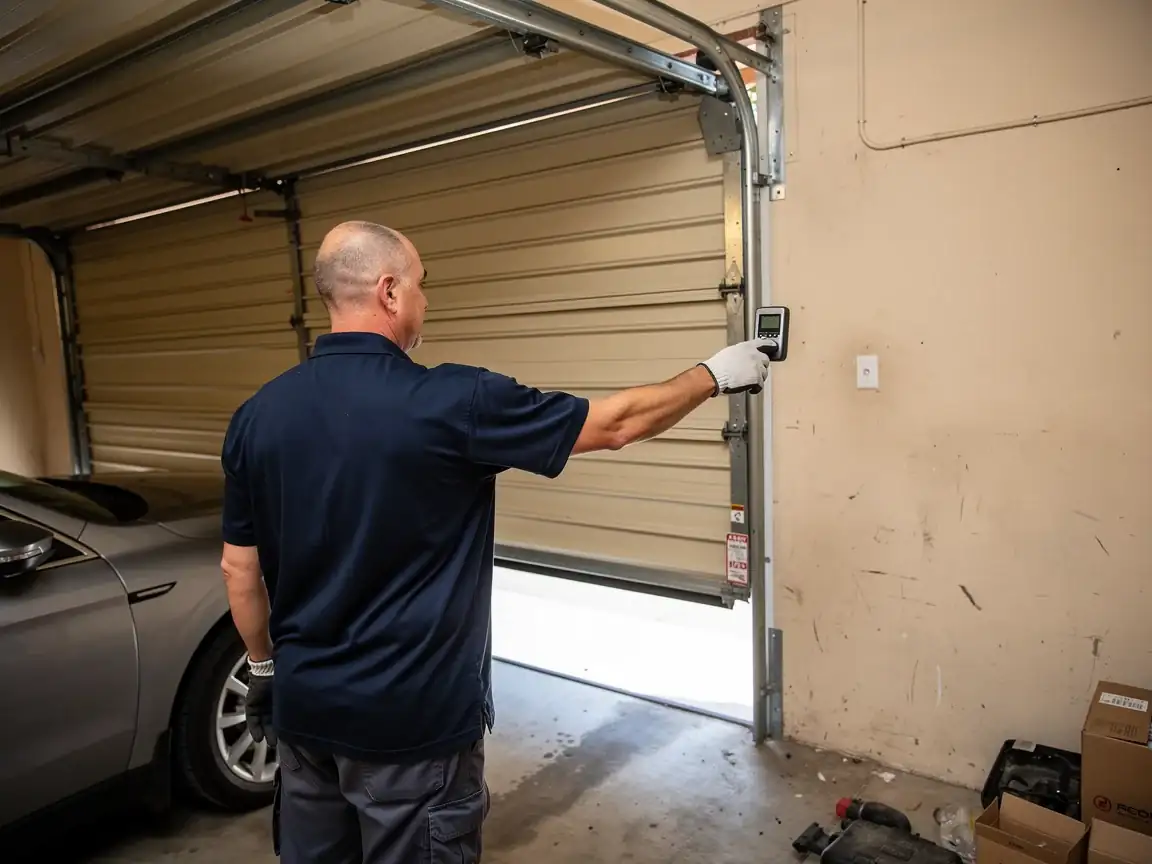
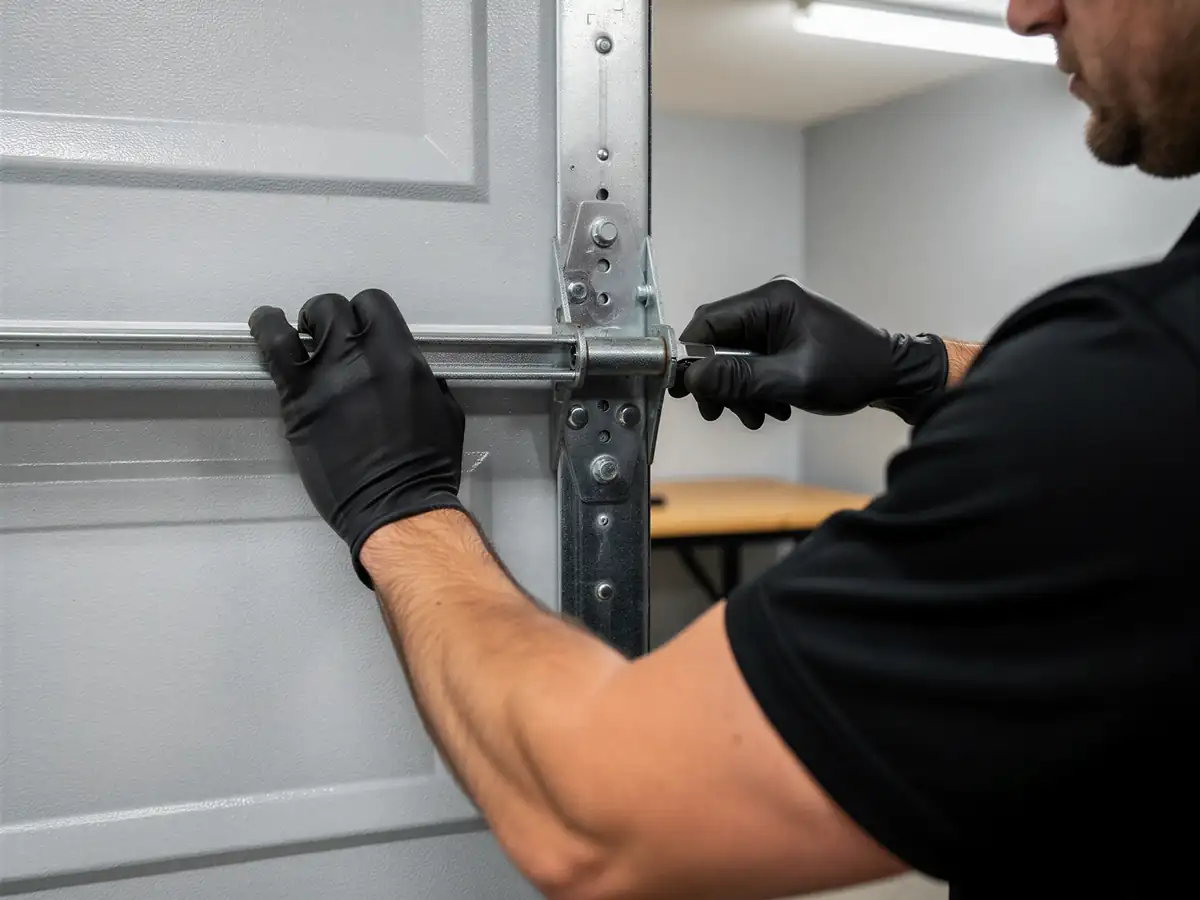
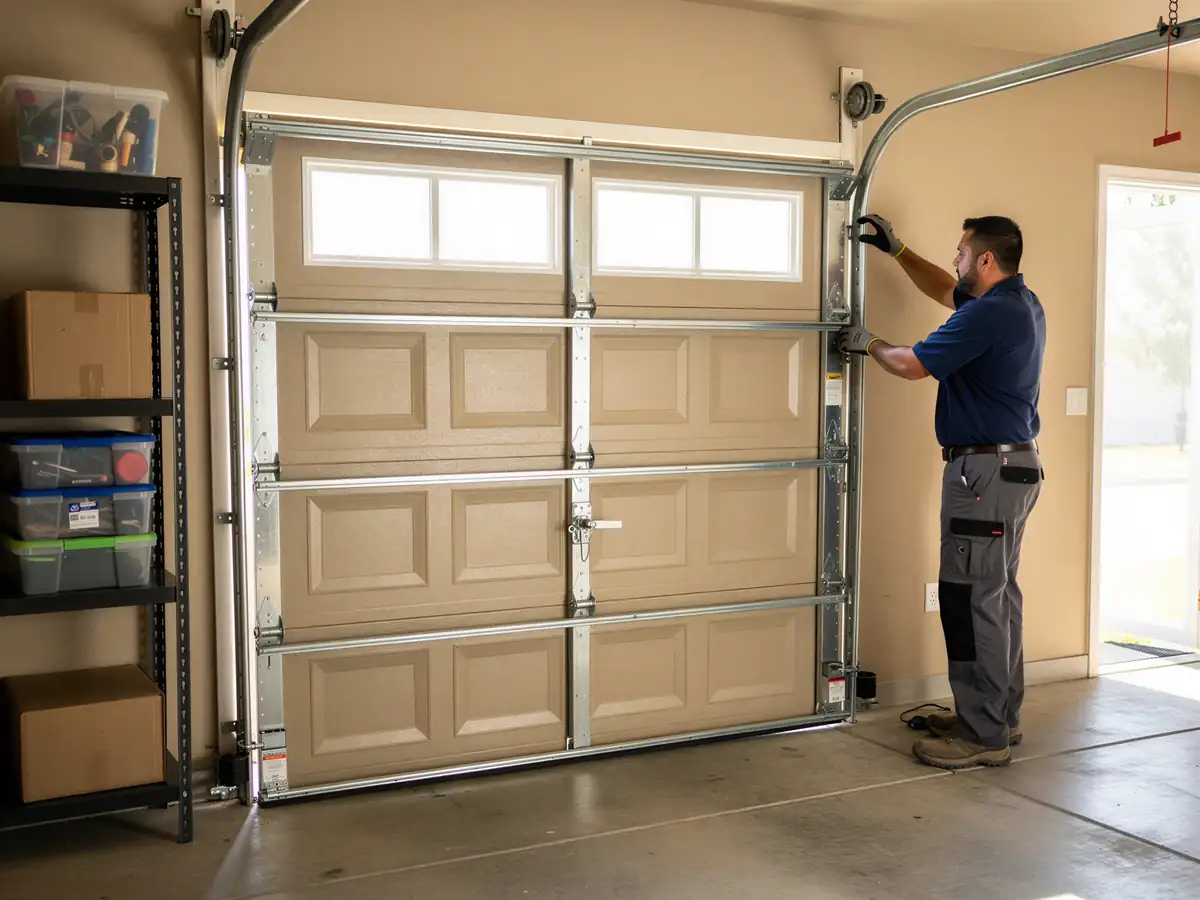
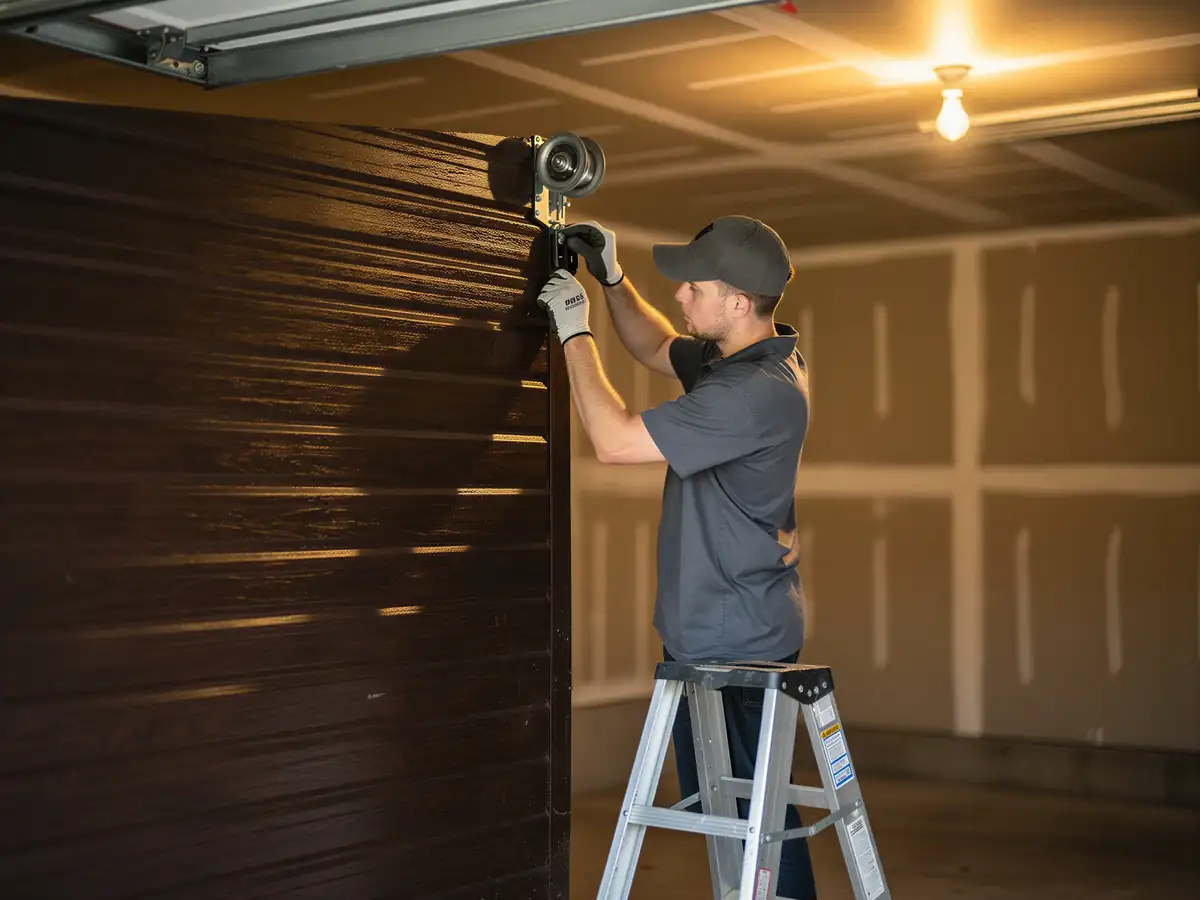
Two different jobs that look similar from the driveway. If a roller has jumped the rail, we release spring tension, walk the panel back into the track, and check every roller and hinge up the run before closing it again. If the track itself is bent - which happens when a door gets forced after it's already started to jump - we either reshape it or replace the section, since a bent rail will throw the door off again within weeks no matter how carefully you reset it.
We also check the jamb brackets
On older stock, the lag bolts holding track to framing loosen over decades of door cycles, and that's often the real root cause, not the roller. Expect us to test the door through a full open-close cycle before we call it done, not just push it halfway and sign off.
The honest limit here
If the track is bent in more than one place or the bottom bracket has pulled away from the panel, that's usually a sign the door's reached the end of economical repair, and we'll say so rather than keep patching a door that's going to keep coming off its rail.
Why This Fails Locally
This service area's housing stock runs 1964 to 2007, with most of it dating to the 1980s and 90s across the nine named areas we work. Doors from that era were built on lighter-gauge track and steel rollers, hardware that was standard for the time but wasn't built to run thirty or forty years without attention. Add in the cold-moderate climate band Woodstock sits in, and you get real seasonal swing - cold snaps contract the steel track and loosen bolts, then warmer stretches let them expand back. That cycle, repeated every year since a house was built, is what walks lag bolts out of jamb framing and lets brackets drift out of alignment until a roller finally jumps the rail.
It's not dramatic weather causing this - we're not talking about hurricane-force wind loads. It's the slow, boring mechanics of metal and wood moving against each other for decades. A house built in 1986 has had roughly as many freeze-thaw cycles as there have been winters since, and every one of those cycles put a small amount of stress on the same four or six bolts. That's why this fault shows up so often on the same vintage of house, and why a track tune-up before it fails is cheaper than waiting for the jump.
The Symptom
You'll usually notice it before the door comes fully off: a grinding or popping sound partway through the cycle, a door that looks tilted in the opening, or a gap where the bottom corner of the panel pulls away from the track on one side. Sometimes it's quieter - the door just stops a few inches from the floor and won't go further, because a roller has already left the rail and the panel is binding against the frame.
If the door is still partway in the track and moving, don't keep running the opener - that's how a minor misalignment turns into a bent track or a torn-loose bracket. If the door has come all the way off the rail and is hanging at an angle, don't try to force it back by hand; the panel is heavier than it looks and the spring is still under tension. Either way, this is a same-day call, not a wait-and-see item, since a door that's off track can drop without warning once it's lost its guide.