The Complications
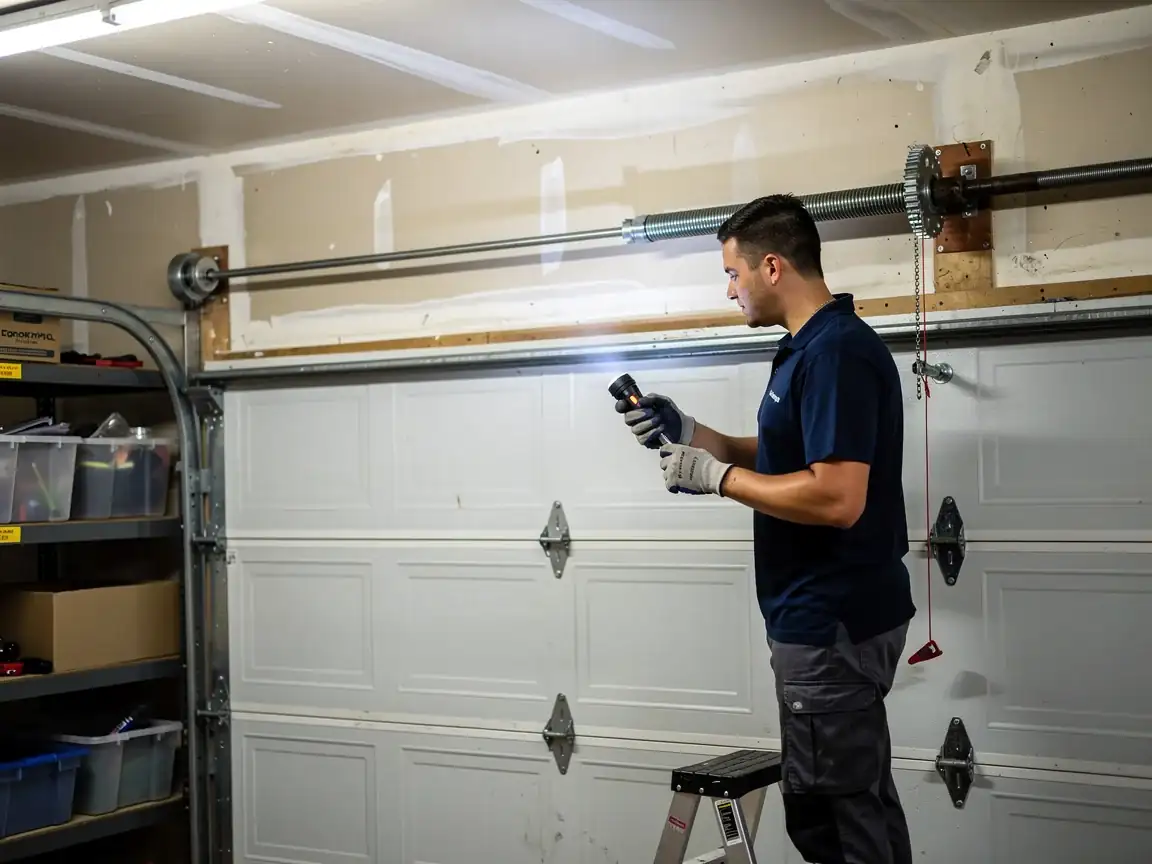
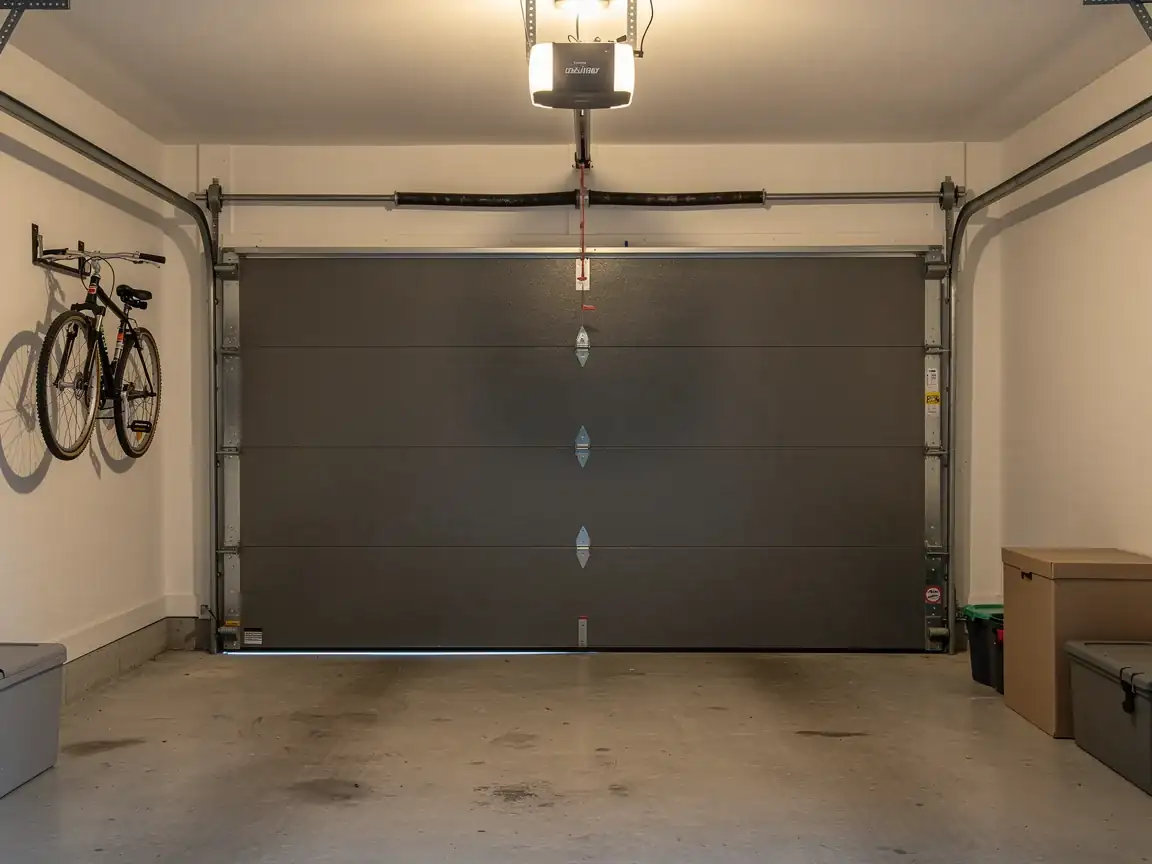
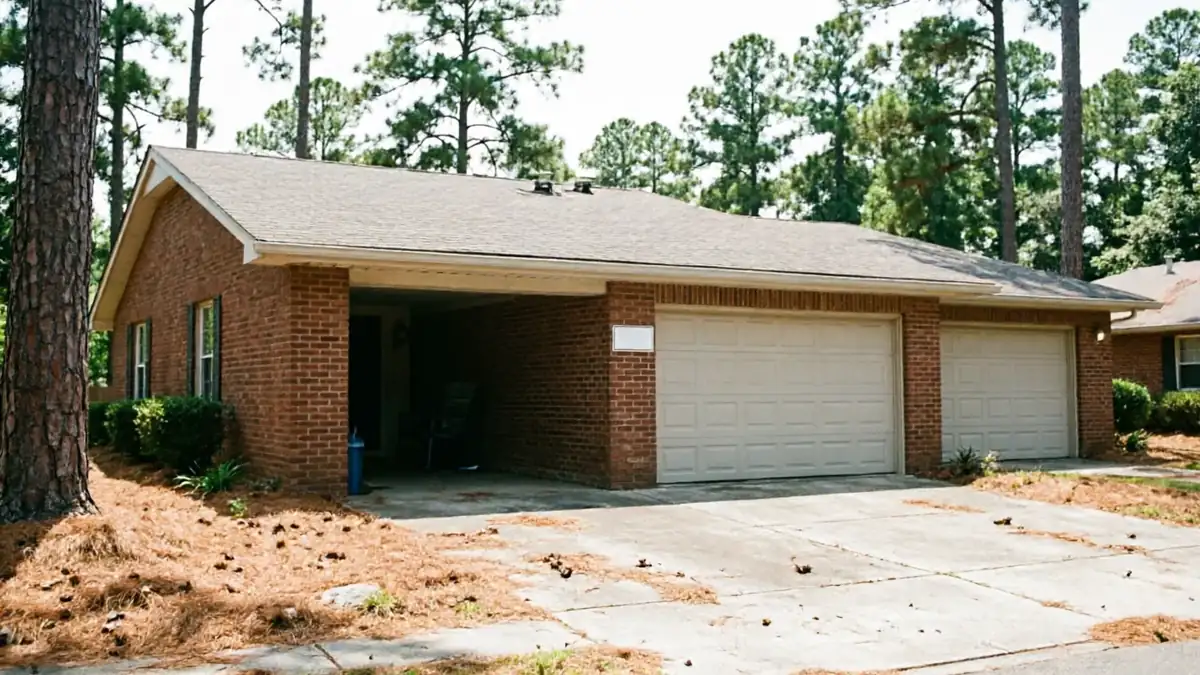
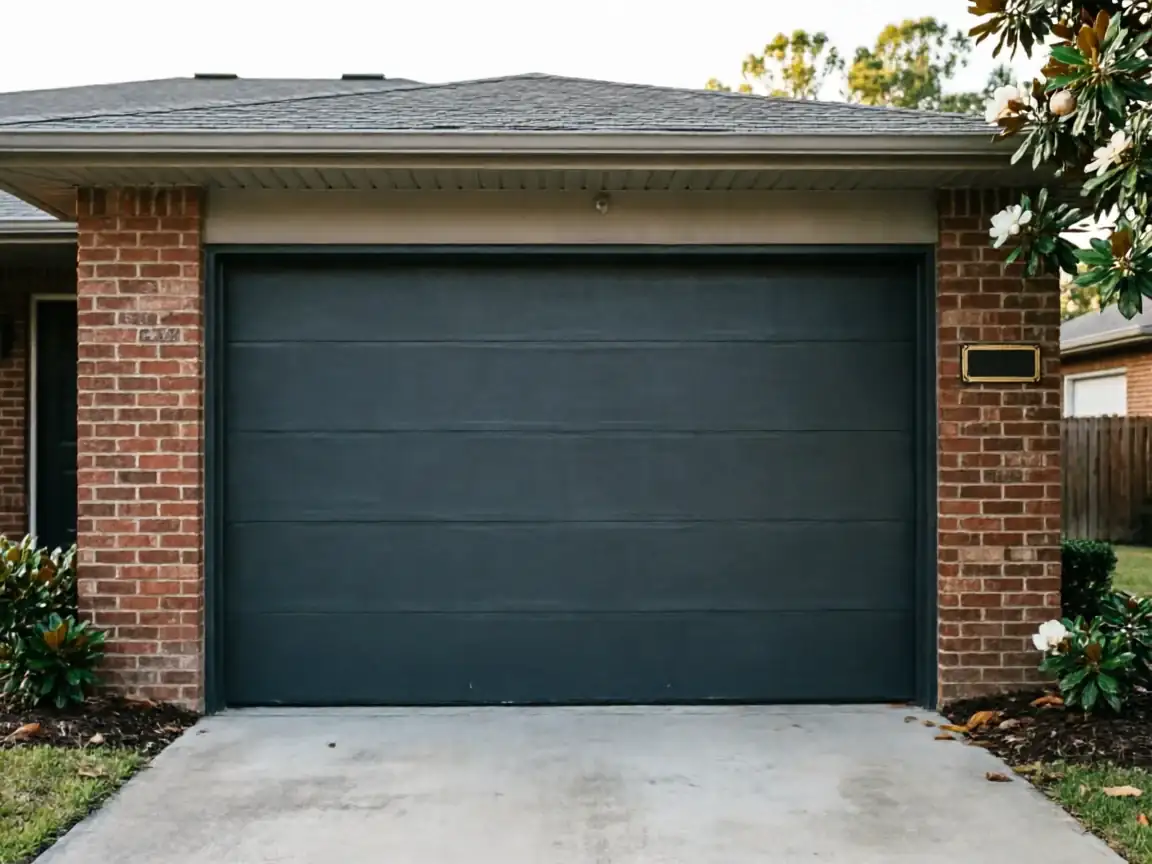
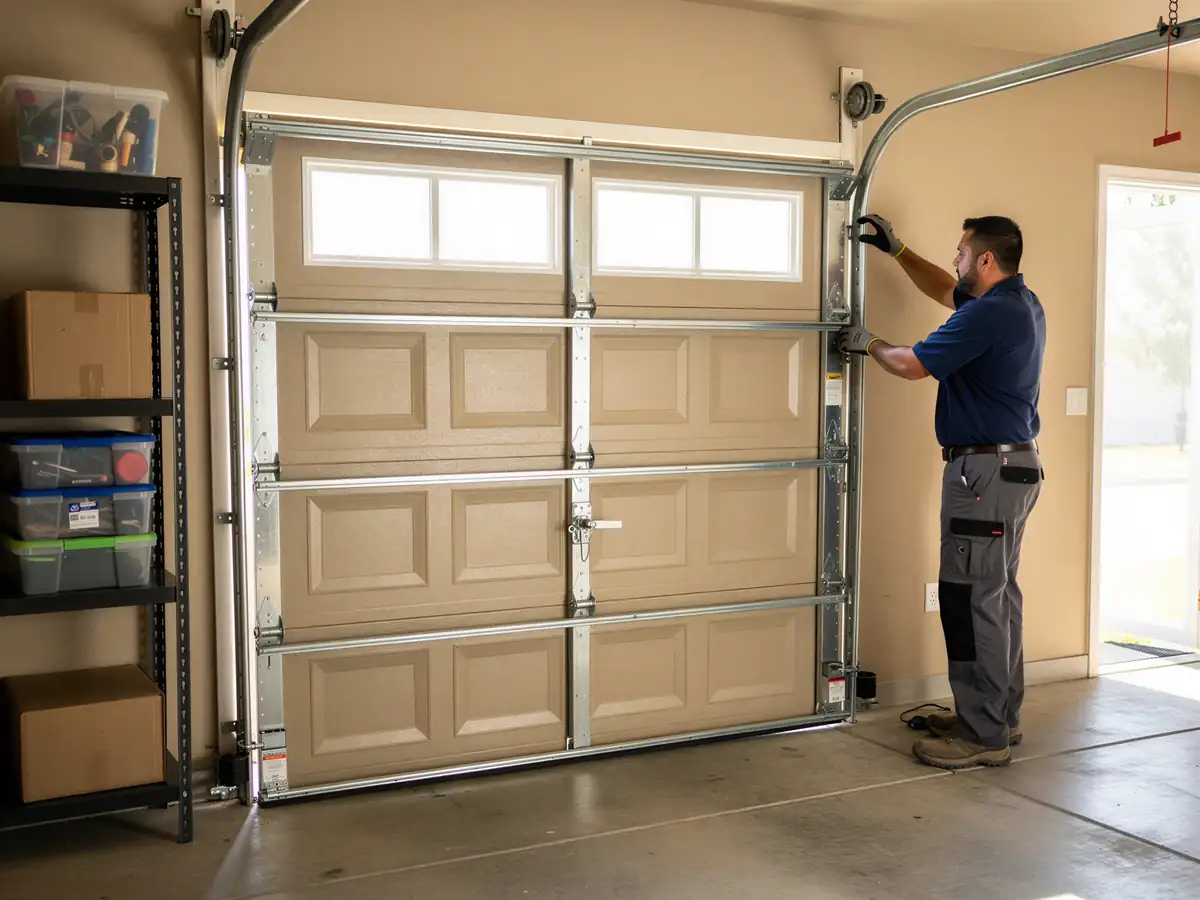
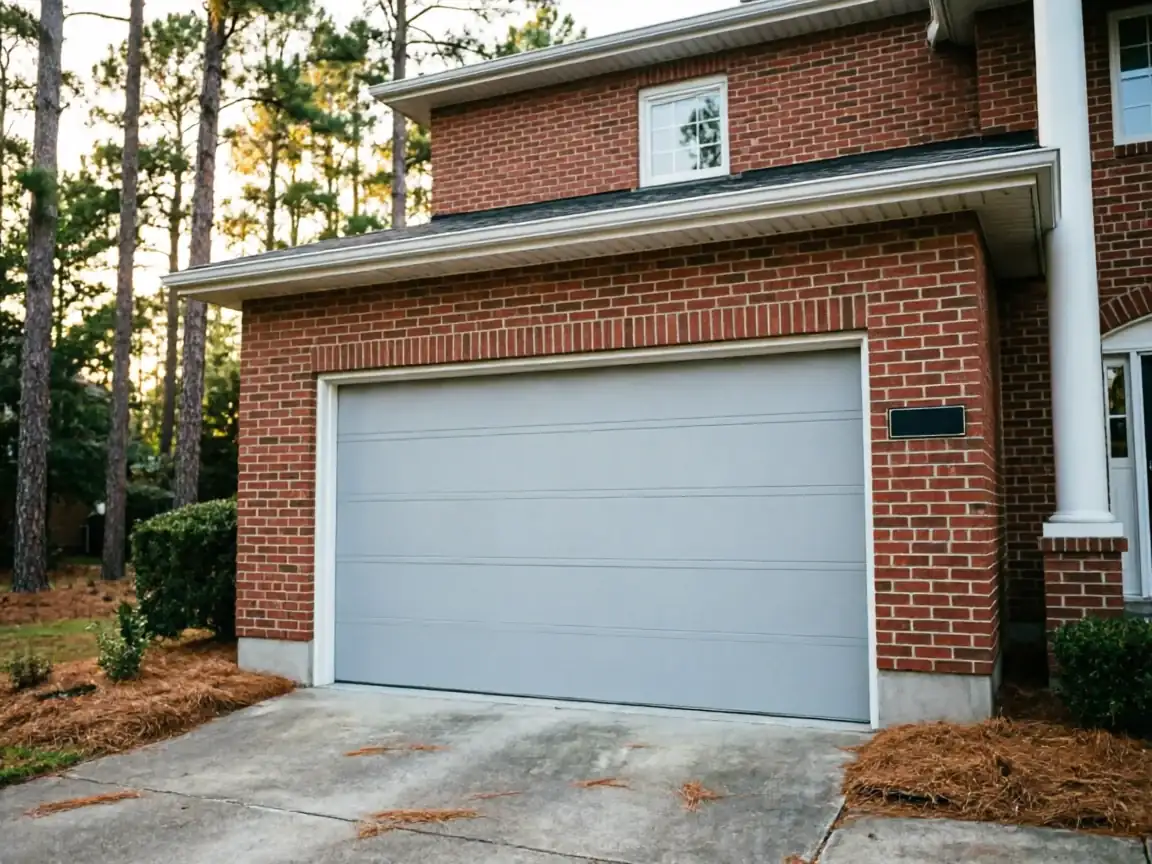
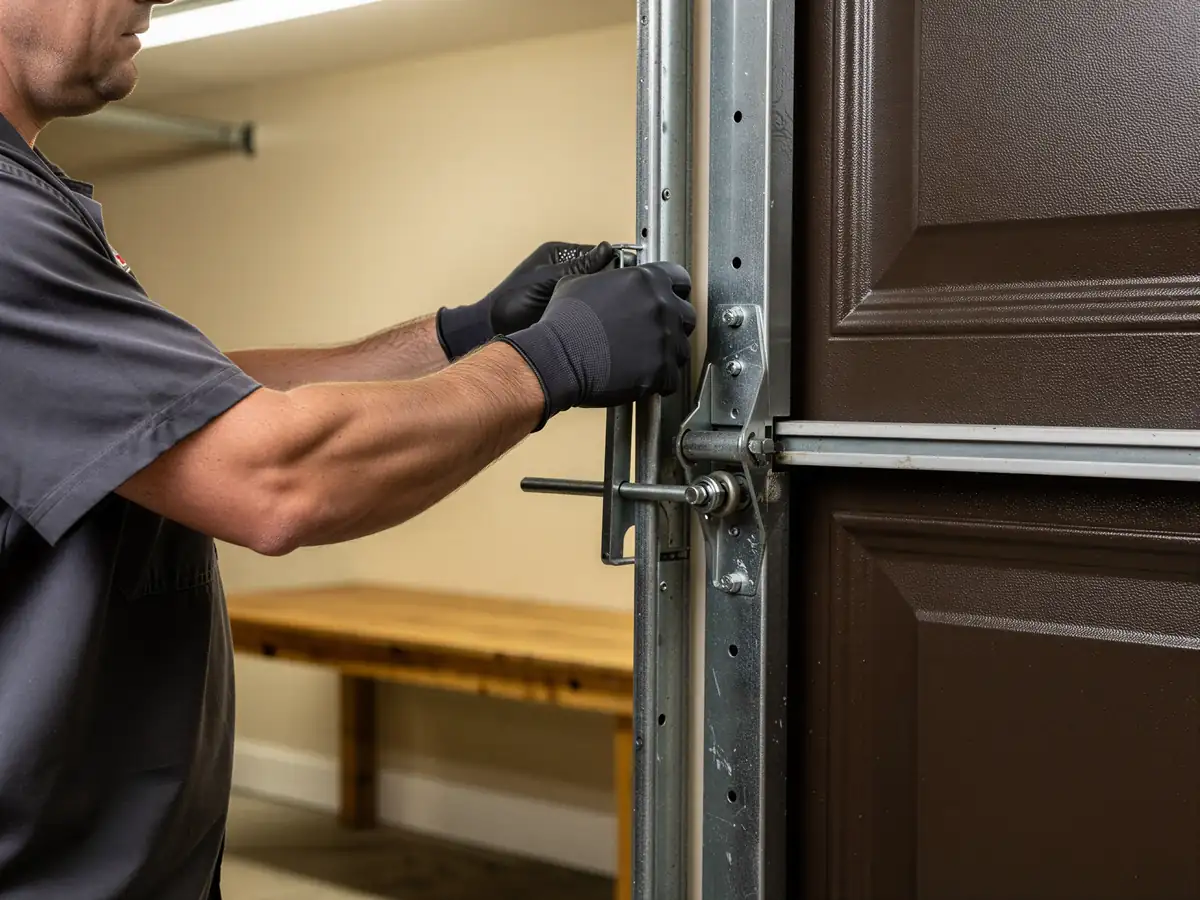
Most garage doors in Holly Springs are younger than what we see on the older side of our territory. Housing here runs later, with the bulk of it built through 2007, so the doors on these homes are mostly builder-grade steel sections on 16x7 or 9x7 openings, factory-painted, with the standard galvanized torsion spring and stamped-steel track that came with the house. That's a different animal than a door from the 1980s. The steel is thinner gauge in most builder packages, the roller brackets are riveted rather than bolted, and the idler pulleys at the bottom of the extension cable (on doors still running that setup) are often molded plastic instead of nylon-over-steel. None of that is a defect. It's just what shipped standard on production homes in that build era, and it ages differently than older stock. A door like this can run fifteen to twenty years on the factory lubrication and still look fine from the driveway while the moving parts are already drying out. The complication isn't rust and sag the way it is on older housing elsewhere in our area - it's wear you can't see from outside, showing up first as noise or a stiff pull, not as visible damage. That's the thing a maintenance visit is built to catch before it turns into a dead spring on a Tuesday morning.
Can You Do This Yourself
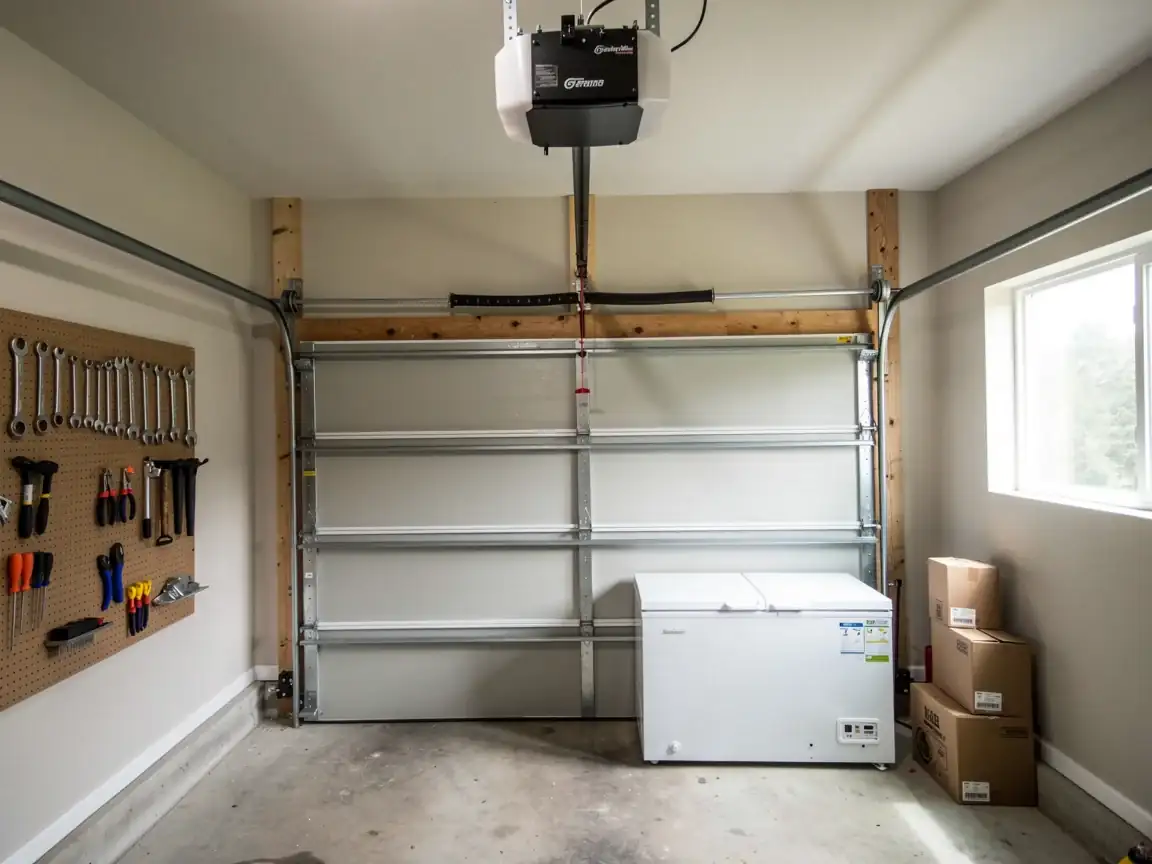
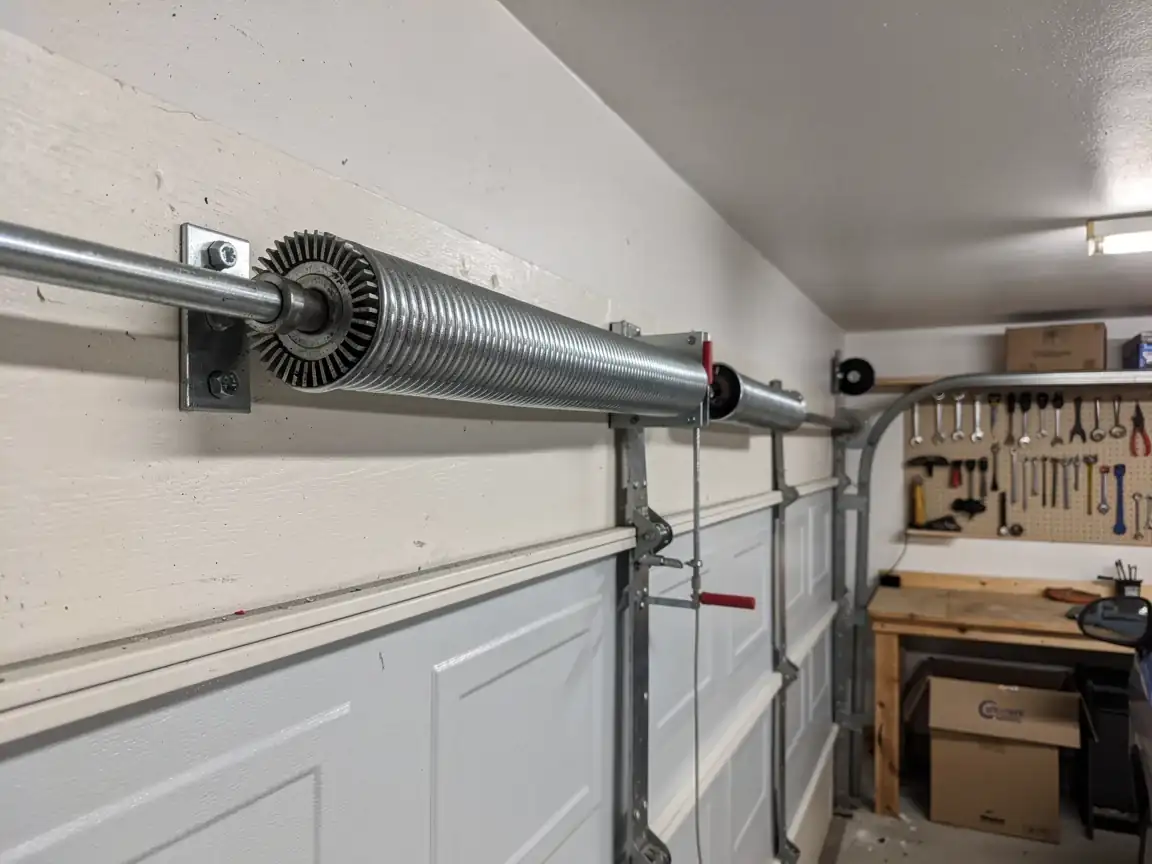
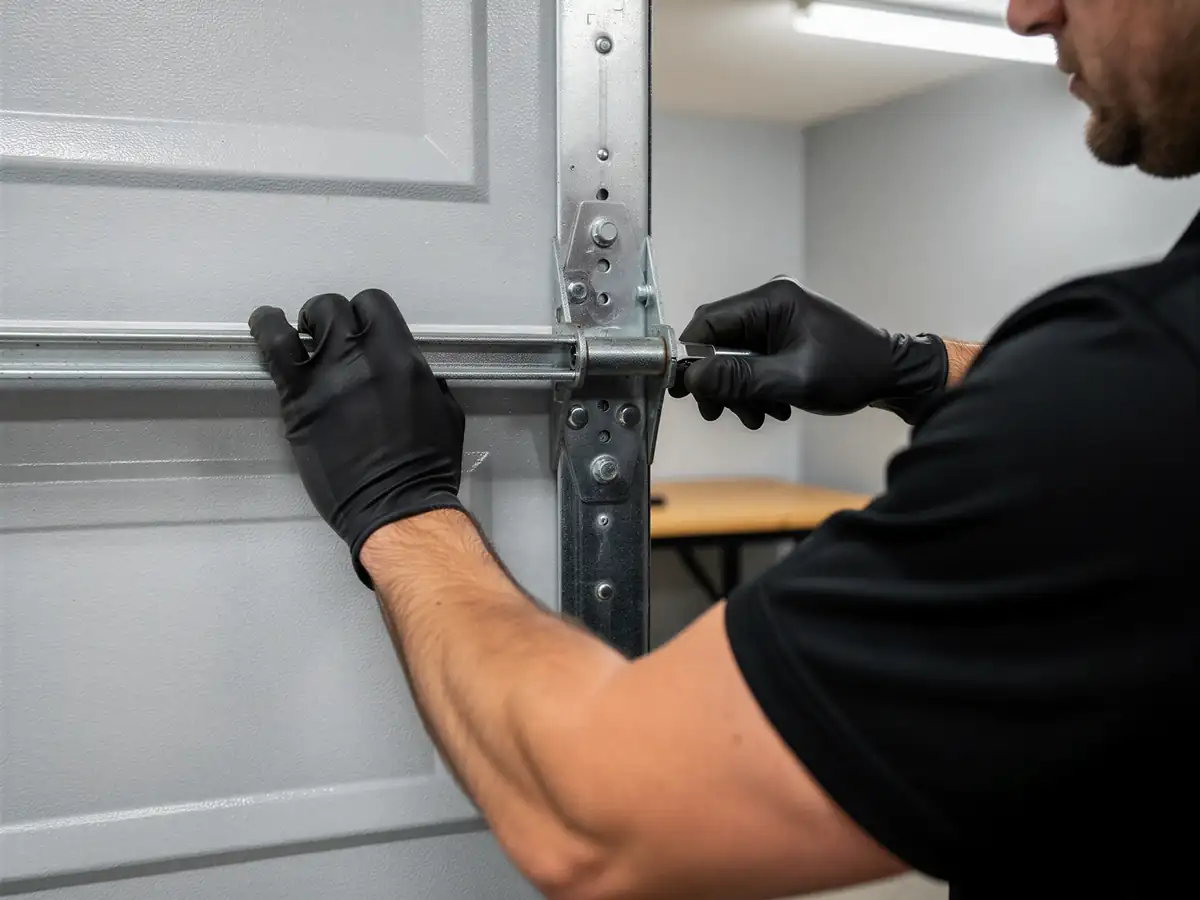
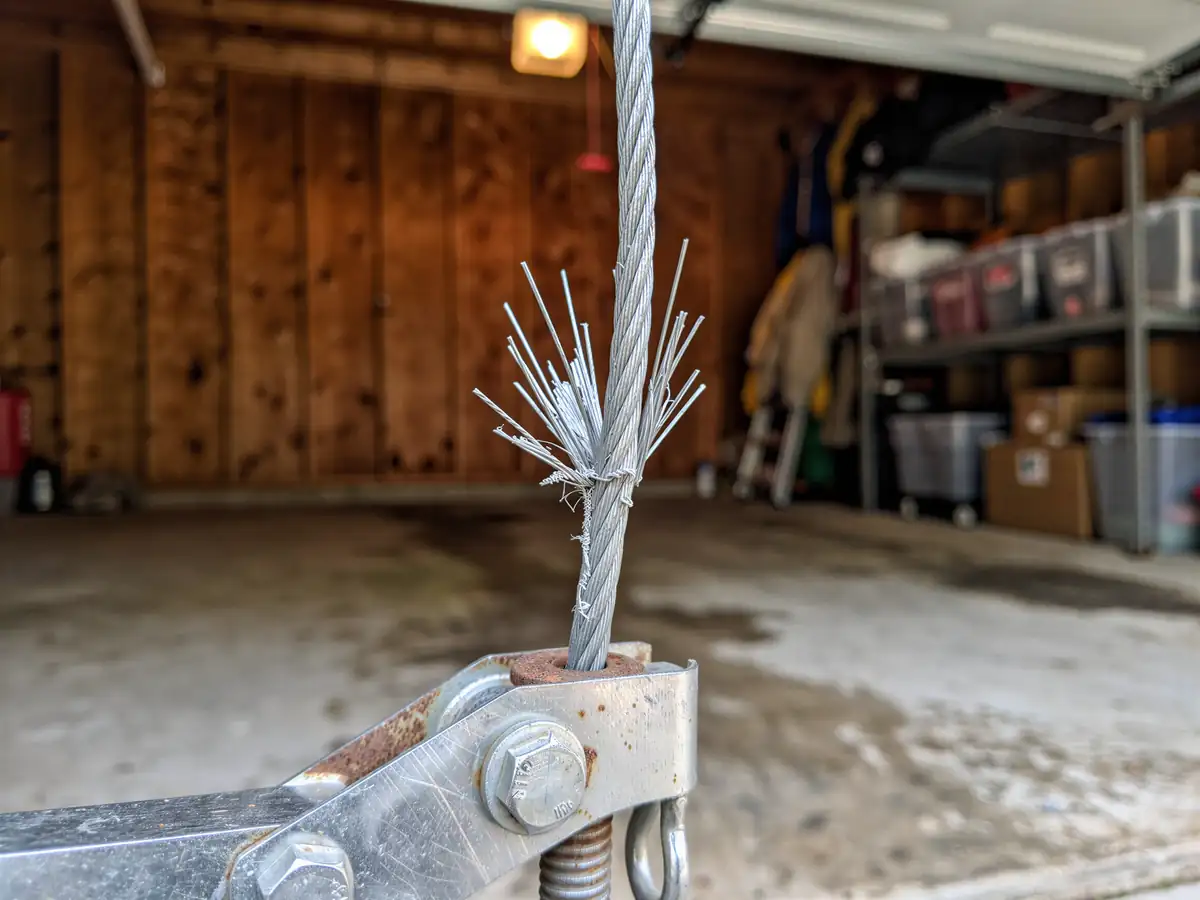
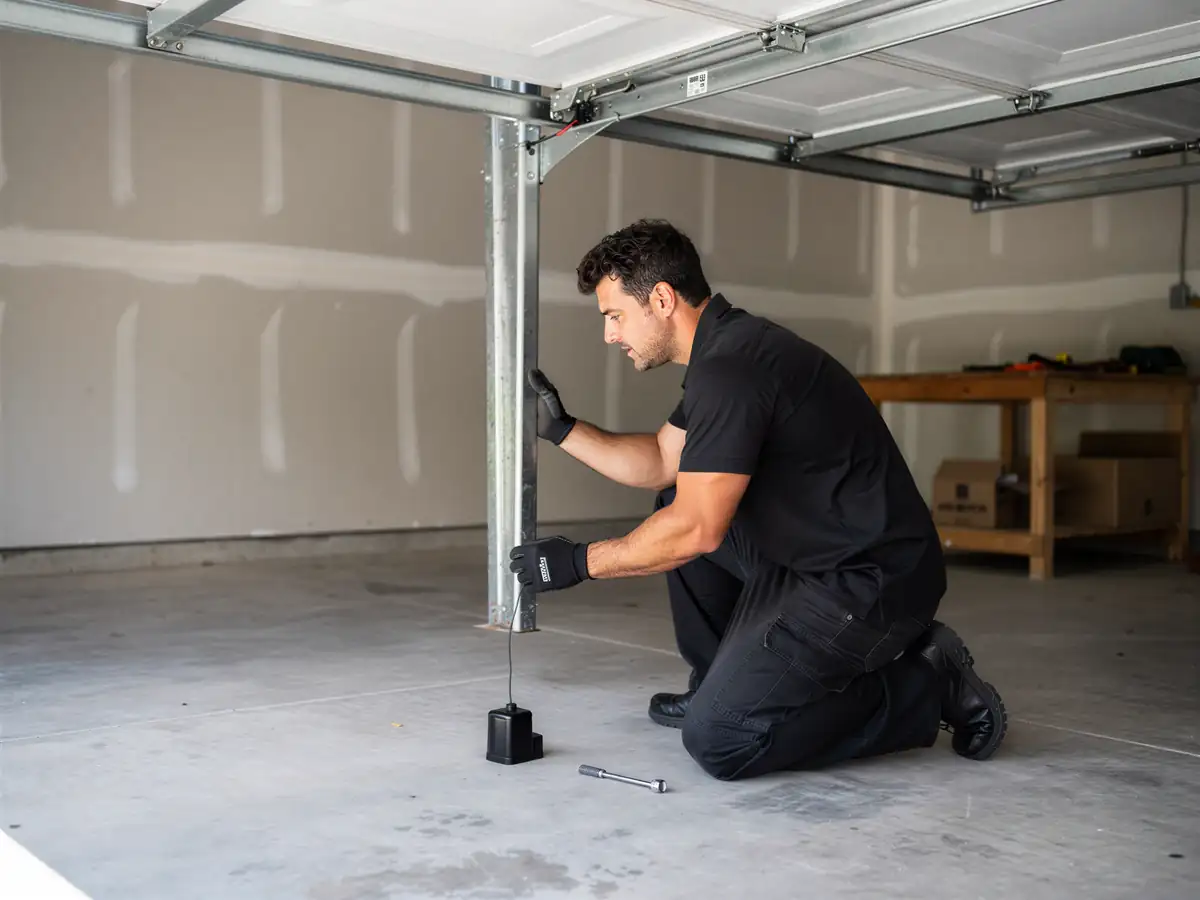
Some of it, yes. You can visually check the cables for fraying, listen for a grinding idler pulley, and keep the tracks wiped down and clear of debris. A can of the right lubricant on the hinges and rollers (not WD-40, which washes out grease rather than replacing it) is a five-minute job most owners can do twice a year. What you shouldn't touch is the torsion spring above the door or anything involving the high-tension cables - those are wound under enough force to cause real injury, and on a 16x7 double door that spring is carrying the full weight of the section. Balance testing is also worth leaving to someone who does it daily; disconnect the opener and lift the door by hand to around waist height, and if it doesn't hold its position on its own, the spring tension is off and that's not a tightening job, it's a spring job. Know where your limit is and you'll avoid turning a $20 part into an ER visit.
How Long It Takes
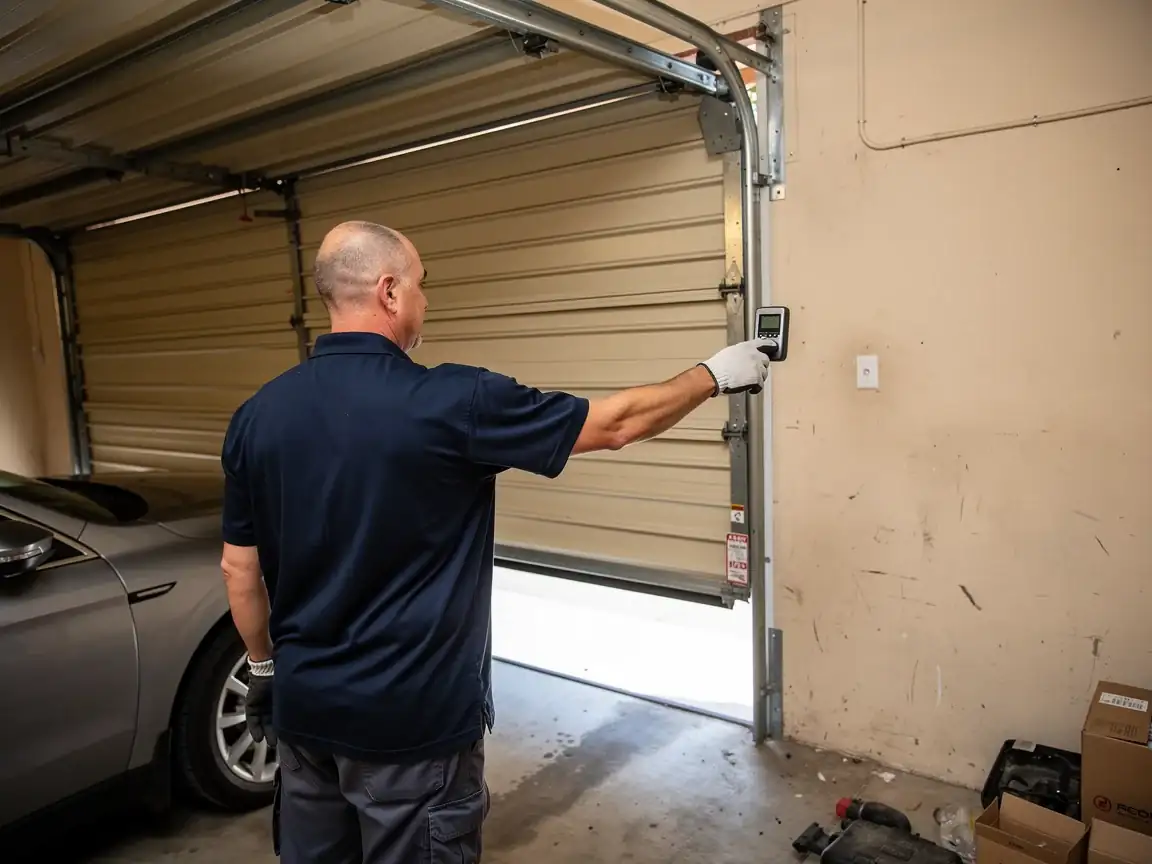
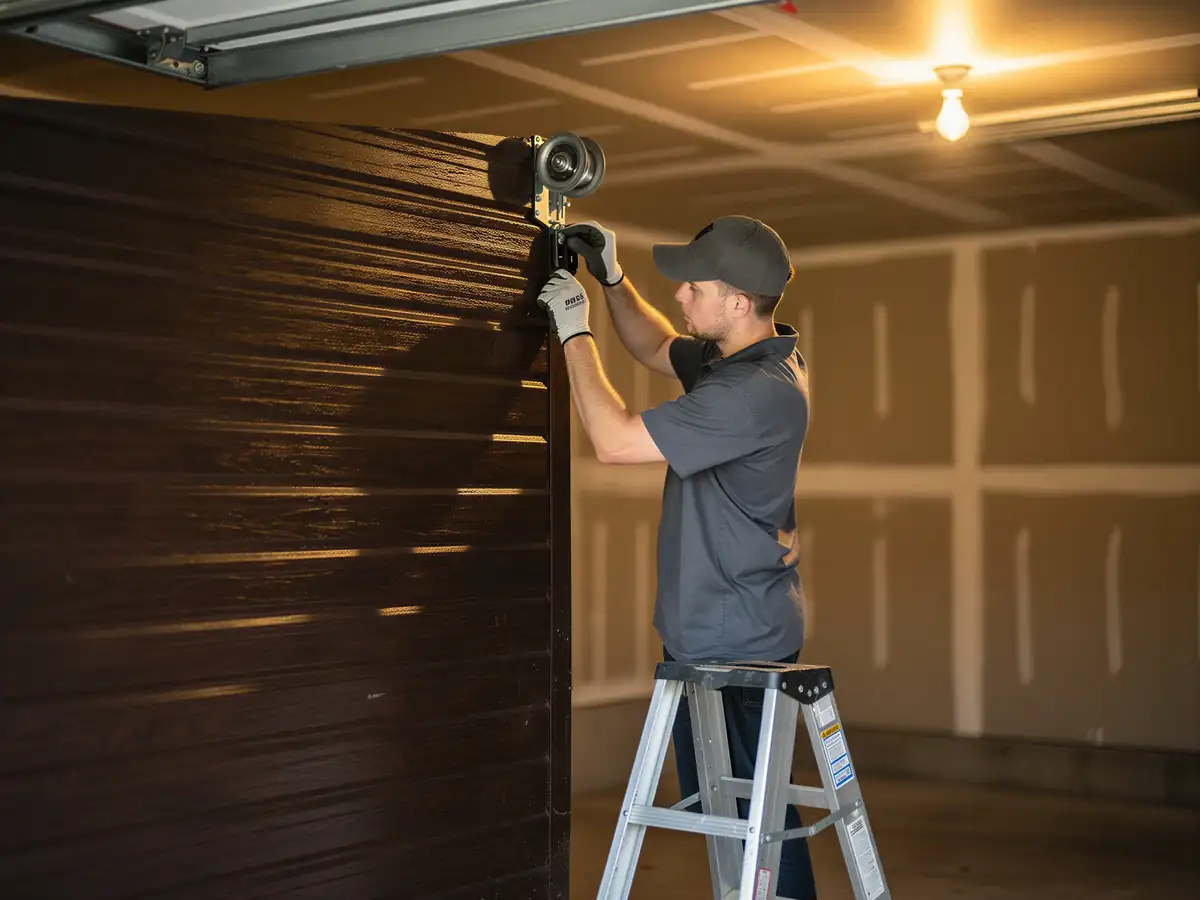
A maintenance visit isn't a quick once-over and it isn't an all-day teardown either - it's somewhere in between, depending on what the door's actually doing. Lubrication, hardware tightening, track alignment, and a balance check on a single door take a fraction of the time a full spring or cable swap would. Builder-grade doors from the 2000s tend to need less structural correction than older stock since the track and jamb brackets haven't had decades to shift, but the plastic pulleys and lighter rollers that shipped on these houses do wear faster than heavier aftermarket parts, so a check that finds a part needing replacement runs longer than one that doesn't. We're not going to quote a fixed time here because it depends on what we find when the door's open in front of us - a door that's been ignored for years takes longer than one that's had regular attention.
The Symptom
The one we hear most from this part of the territory is a door that's gotten loud - a grind or a squeal on the way up, sometimes a hesitation partway through the cycle before it keeps going. On a door built in the 2000s, that's almost always a dry roller or a worn plastic pulley rather than a structural problem, because the hardware hasn't had the decades of flex that cause real track misalignment. It's an easy symptom to live with for a while since the door still opens, but it's also the exact symptom a maintenance visit is meant to catch - a dry roller today is a seized roller in another year or two, and a seized roller puts load somewhere the door wasn't built to carry it.